

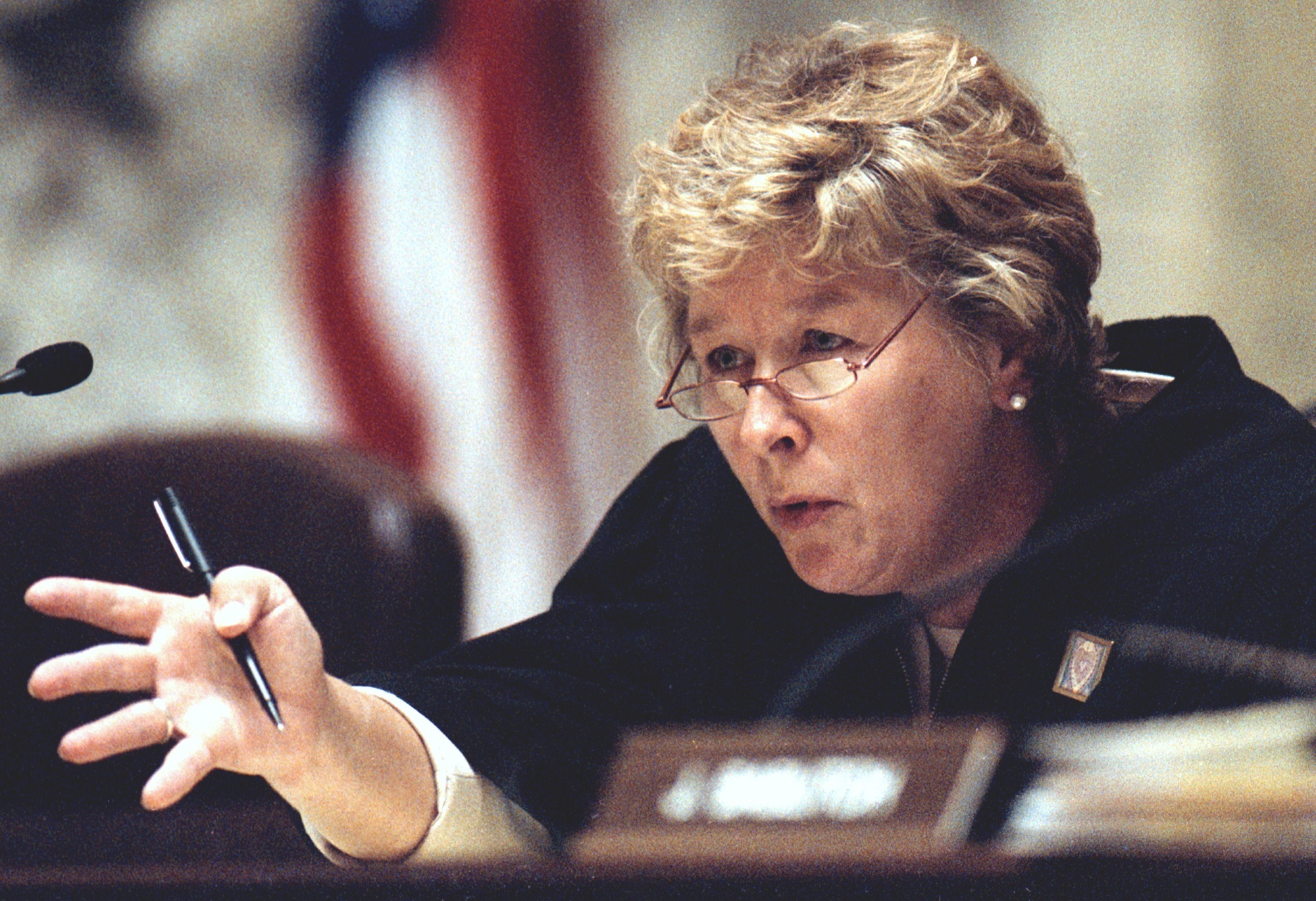
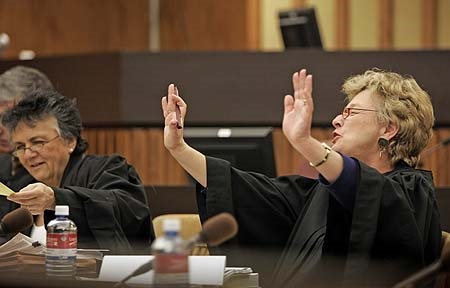
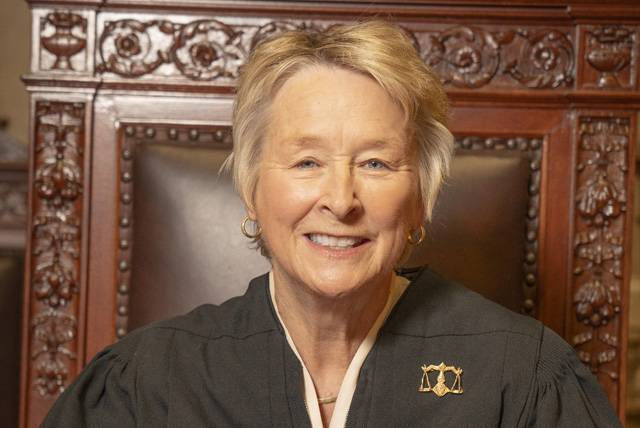
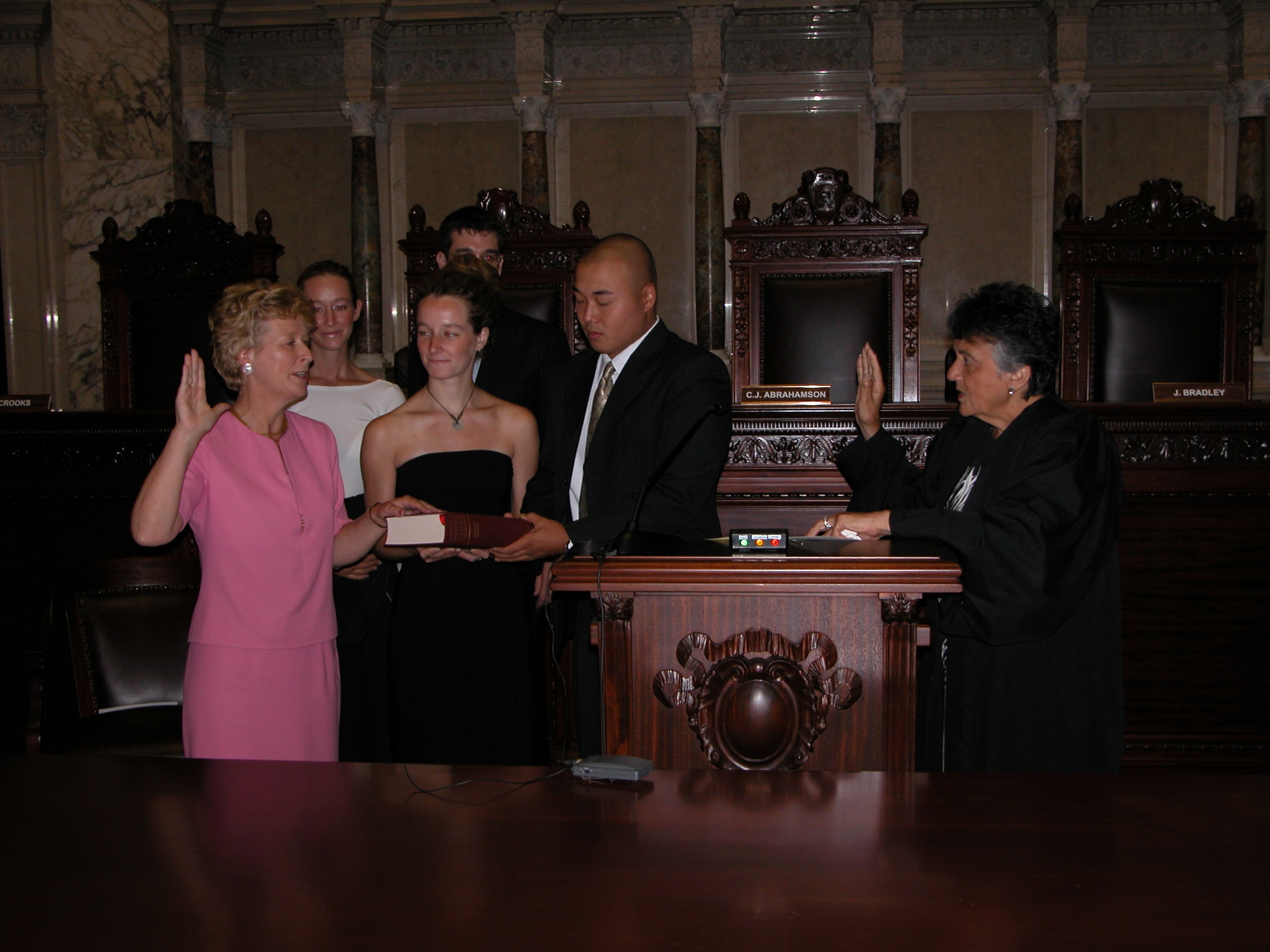
Justice Ann Walsh Bradley, the first woman to reach the Wisconsin Supreme Court by way of election, will retire this summer after 30 years of service. Her tenure is the fifth longest in the court’s 177-year history.
Her retirement marks the end of a trailblazing judicial career that helped shape the modern court. When she first joined the bench in 1995, she became only the third woman to serve on the state’s highest court. Today, six of the seven justices on the Wisconsin Supreme Court are women, the highest percentage of any state supreme court in the country.
Justice Bradley has participated in more than 28,000 cases, 2,375 oral arguments, and authored nearly 600 written opinions. Colleagues and former justices describe her as intellectually rigorous, deeply prepared, and quietly influential. She is a justice committed to fairness, access to justice, and public trust.
From rural roots to the court
Justice Bradley grew up in Richland Center, in the same house where her father was born. After starting her career as a teacher, she earned a law degree from the University of Wisconsin and became a litigator in central Wisconsin. She was appointed to the Marathon County Circuit Court in 1985 and served there for 10 years before running for the Supreme Court.
Her election in 1995 was historic. She was the first woman to win a seat on the court through a contested election rather than by appointment. She did so with broad bipartisan support. Her campaign was chaired jointly by Democratic former Gov. Tony Earl and Sue Ann Thompson, the wife of then-Gov. Tommy Thompson, a Republican.
The victory was a landslide. Justice Bradley took 60 of 72 counties in the primary and won the general election by nearly 100,000 votes.
"A remarkable opportunity”
Over the years, Justice Bradley has often reflected on her path from Richland Center to the Capitol’s east wing. She describes that journey as one rooted in gratitude. Her early years on the court were defined by long hours, thorough preparation, and a strong sense of purpose that she says never wavered.
“This job is a calling, just like being a circuit court judge is,” Justice Bradley said. “It’s an extension of my teaching years—all intertwined with the sense of justice. The opportunity to be one of seven as an instrument of justice in this state is a remarkable opportunity.”
She often describes her service not in terms of specific rulings, but of values. “I think that in reviewing my 30 years on the court, someone would discover that I have been dedicated not only to the rule of law, but also to administrative matters, which promote access to justice. Transparency in government, I believe in, not just to be transparent because we want to show things, but because it is a foundation of having the public trust and confidence of the people.”
Court evolution
Justice Bradley began her tenure at a time when the court handled a much higher volume of cases. In her first full term, the court issued 75 authored opinions. The pace was intense. Justices were expected to write their share of majority opinions, plus concurrences and dissents, often with only one law clerk per chamber.
She remembers bringing petitions for review to her children’s basketball games and working long hours at night. During those early years, she commuted from Wausau and sometimes worked from the local court of appeals.
As the number of cases decreased in later years, the stakes rose. “The cases we have now are consistently of such import and big cases,” Justice Bradley said. She noted that national attention and constitutional disputes have become more common.
Throughout her tenure, Justice Bradley authored 561 total opinions. That includes 256 majority opinions, 95 concurrences, and 210 dissents. Her dissents, in particular, have gained recognition. She recalled law professors telling her they teach her dissents in class.
“That’s one of the reasons to write dissents — hoping that someday they become the majority,” she said.
Looking ahead
Justice Bradley’s next chapter will include topics near and dear to her heart, namely supporting democracy, justice, and the rule of law at home and abroad.
She currently serves as chair of the board of trustees for the International Association of Women Judges, a network of more than 6,500 judges from 143 countries. The organization promotes human rights and access to justice through judicial leadership. Justice Bradley plans to expand her involvement with the group following her retirement, helping foster judicial independence and support for women judges worldwide.
“Whether it’s in Ukraine or Pakistan or Morocco or the United States, I’ve participated in what we used to call the ‘glass ceiling conferences,’ encouraging women to run for their local court, circuit courts, and higher courts,” Justice Bradley said. “We still have room for improvement. We have women of such talent and ability, and we need to encourage and help and mentor those among us.”
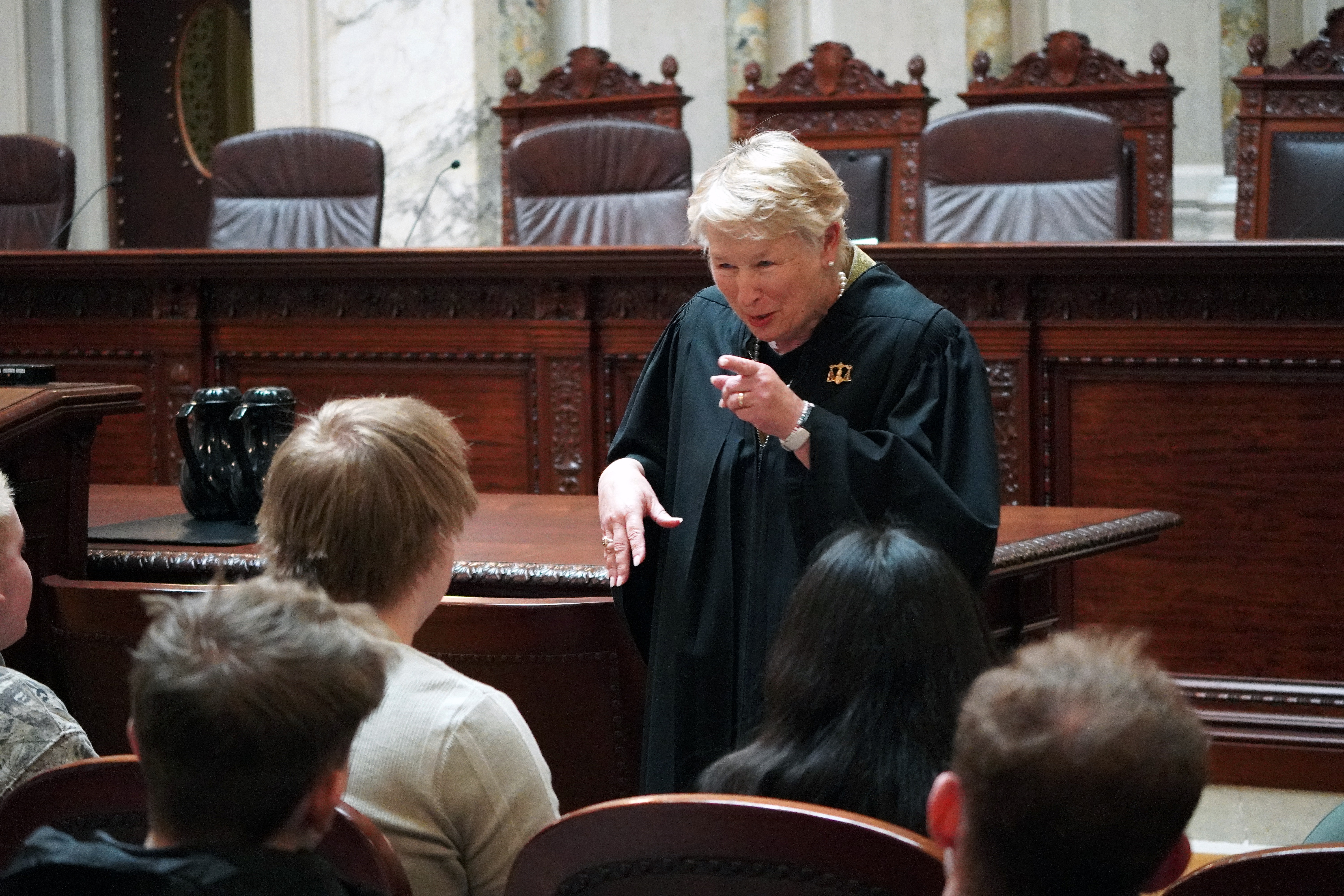
She is also committed to civic education. Justice Bradley has long supported iCivics, the nonprofit founded by former U.S. Supreme Court Justice Sandra Day O’Connor. The program provides free educational resources to schools and communities across the country to help students learn how government works and why civic participation matters. Justice Bradley sees this work as essential to maintaining a healthy democracy.
And while her professional calendar may look different, her personal life will be as full as ever. She plans to spend more time with her husband, four children, and seven grandchildren, while remaining a presence in the legal and judicial community.
A legacy of service
Justice Bradley’s influence extended far beyond her written opinions. She played a central role in strengthening the judiciary’s connection to the public and in shaping the court’s internal culture. Her colleagues describe her as someone who approached each decision with seriousness and care, but also with humility and a sense of joy.
As she prepares to leave the court, Justice Bradley reflected on what she hopes to leave behind as part of her legacy: “If you would ask some of the justices on this court about what they have garnered from me as they continue on without my presence, it is the importance of celebration, the importance of focusing on joy,” Justice Bradley added.
Her legacy will live on in the generations of jurists she inspired, in the opinions that shaped Wisconsin law, and in the values she championed throughout her life of public service.
Third Branch eNews is an online monthly newsletter of the Director of State Courts Office. If you are interested in contributing an article about your department’s programs or accomplishments, contact your department head. Information about judicial retirements and judicial obituaries may be submitted to: Sara.Foster@wicourts.gov