

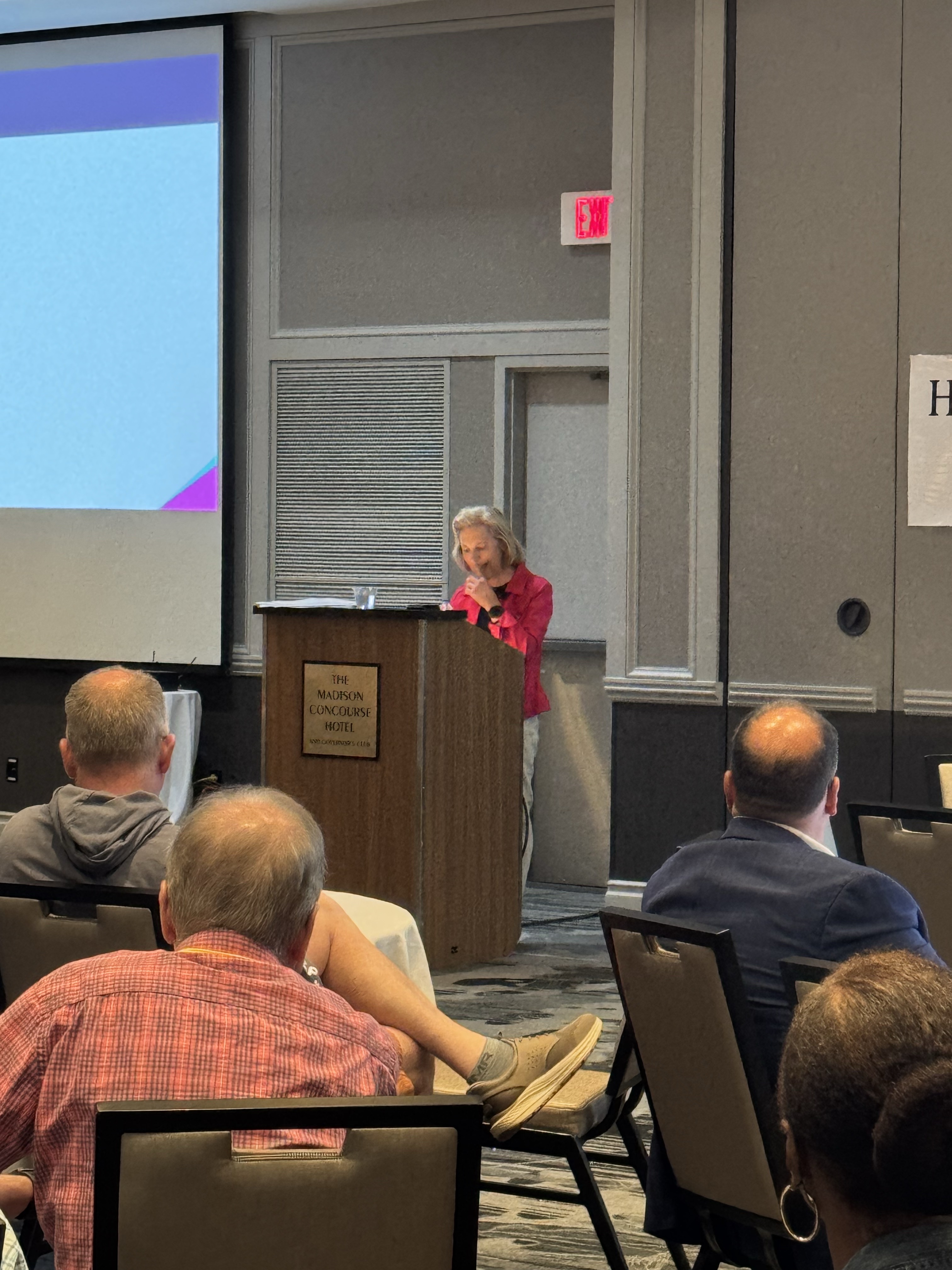
Court officials gathered in Madison in late June for training focused on safety, trauma, lethality, and risk assessment in cases involving domestic violence, sexual assault, and family law.
The training included a June 25 STOP Summer Seminar, “Safety, Trauma, & Lethality in Court,” held at The Concourse Hotel in Madison, followed by a June 26 program on “Risk & Risk Assessment in Intimate Partner Violence.”
The sessions were developed to help court professionals identify risk factors, understand trauma and safety concerns, and apply practical tools in cases that may involve overlapping family, criminal, juvenile, and civil issues.
The June 25 seminar opened with a session on STOP Grant resources and the SAFeR Framework, presented by Atty. Kelsey Mullins, legal advisor in the Office of Court Operations. Sheboygan County Circuit Court Judge Natasha Torry presented on sexual assault dynamics involving youth victims, Brown County Circuit Court Judge Thomas Walsh discussed intersecting family cases and targeted dockets, and Manitowoc County Circuit Court Judge Jerilyn Dietz led a session on vicarious trauma and the limitations of self-disclosure.
The June 26 training, presented by national experts on domestic violence fatality, retired Washington State Judge Anne Hirsch, Rebecca Thomforde of the Center for Justice Innovation, and Amber Moe of the Center for Justice Innovation, focused on risk and lethality factors in intimate partner violence cases, including warning signs associated with recidivism, escalating harm, and potential lethality. The agenda included discussion of high-risk factors such as access to weapons, stalking behaviors, and violence during or after separation.
Participants also took part in an interactive exercise examining the barriers to safety and the complex realities that may influence a survivor’s decision to remain in or return to an abusive relationship. Additional sessions focused on assessing intimate partner violence risk in family law cases and applying risk-informed practices in participants’ professional roles.
Chief Justice Jill Karofsky offered remarks during the June 26 training.
The programs stressed the role courts play in recognizing safety concerns, responding to trauma, and supporting consistent, educated decision-making in difficult and sensitive cases.
Third Branch eNews is an online monthly newsletter of the Director of State Courts Office. If you are interested in contributing an article about your department’s programs or accomplishments, contact your department head. Information about judicial retirements and judicial obituaries may be submitted to: Sara.Foster@wicourts.gov