
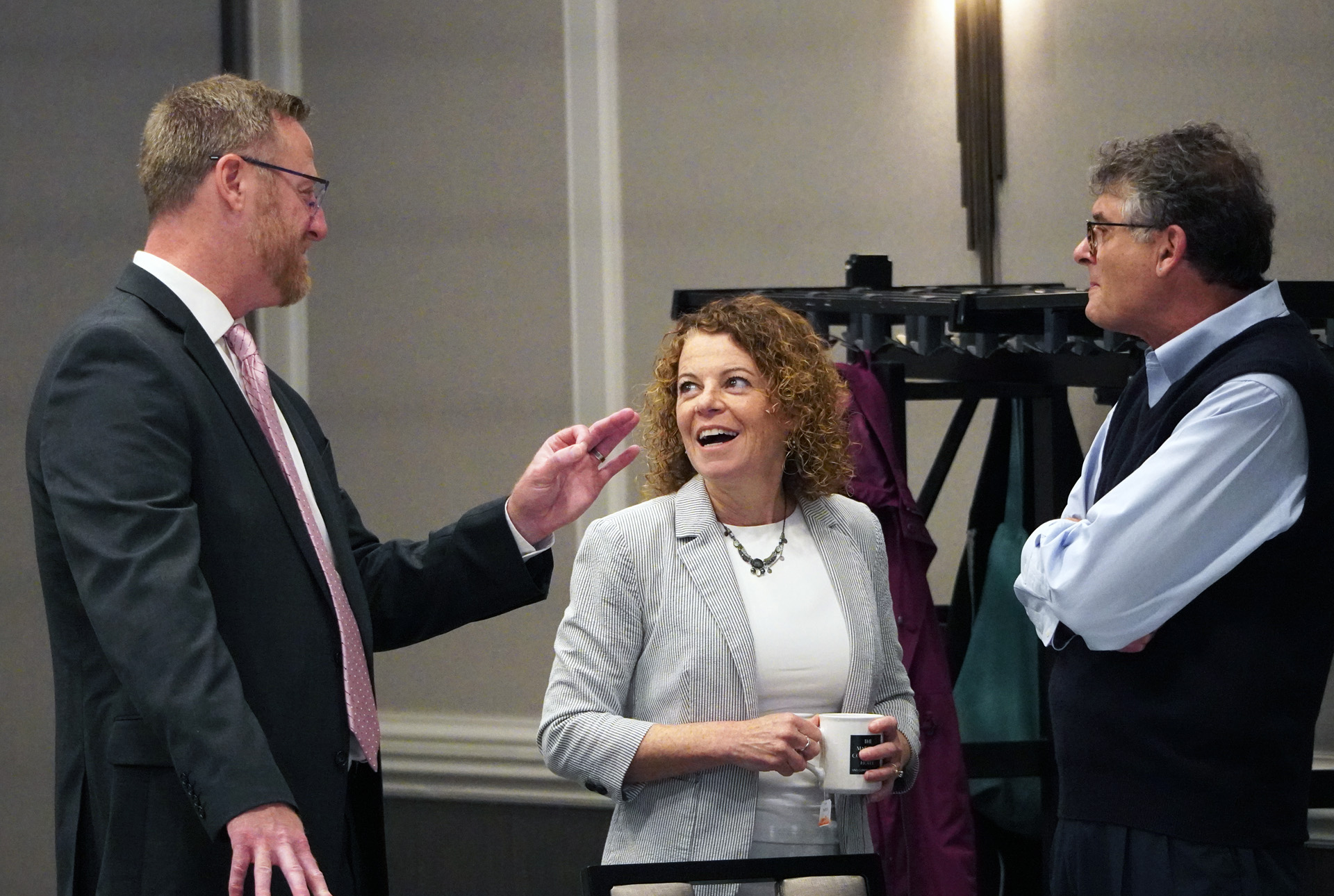
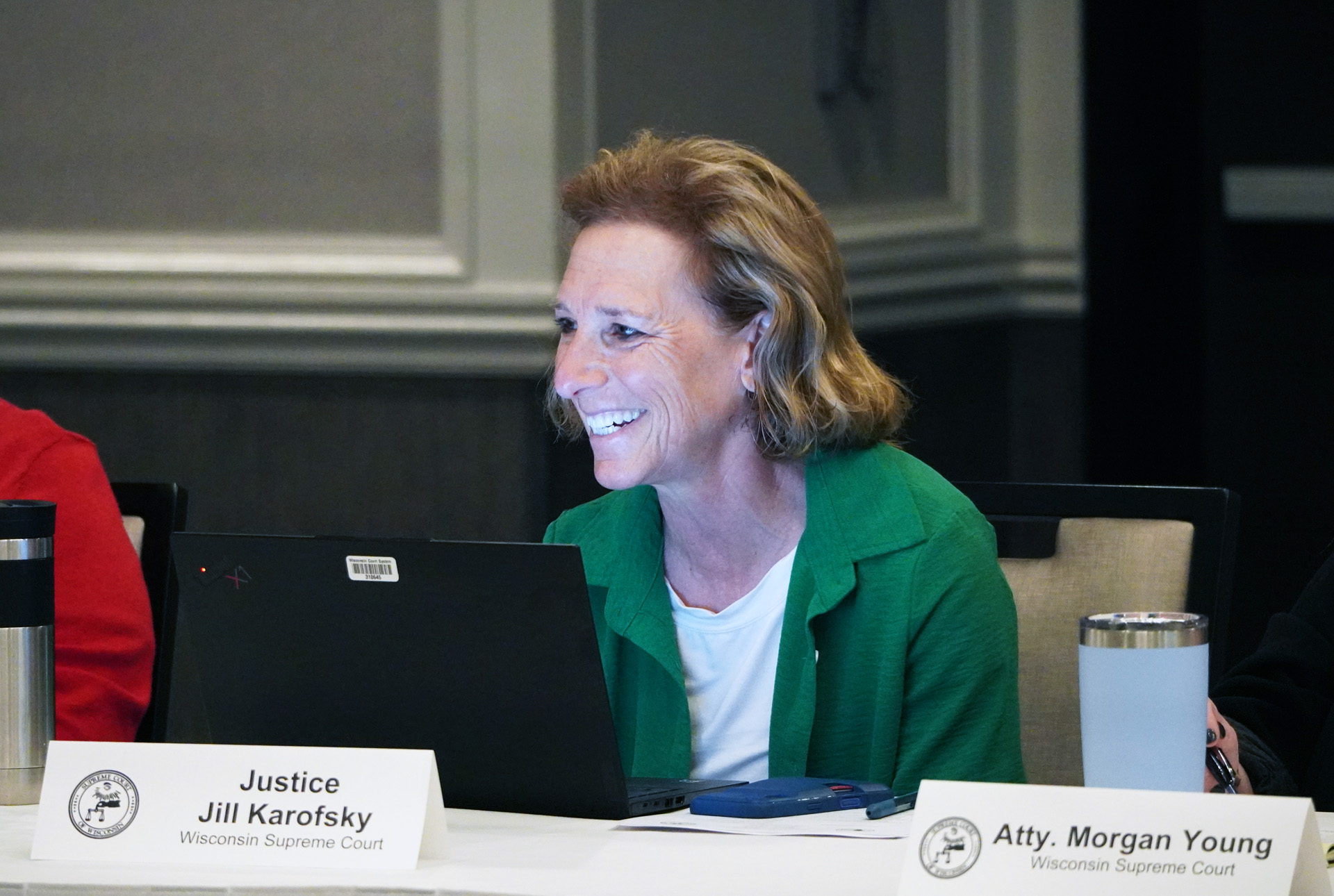
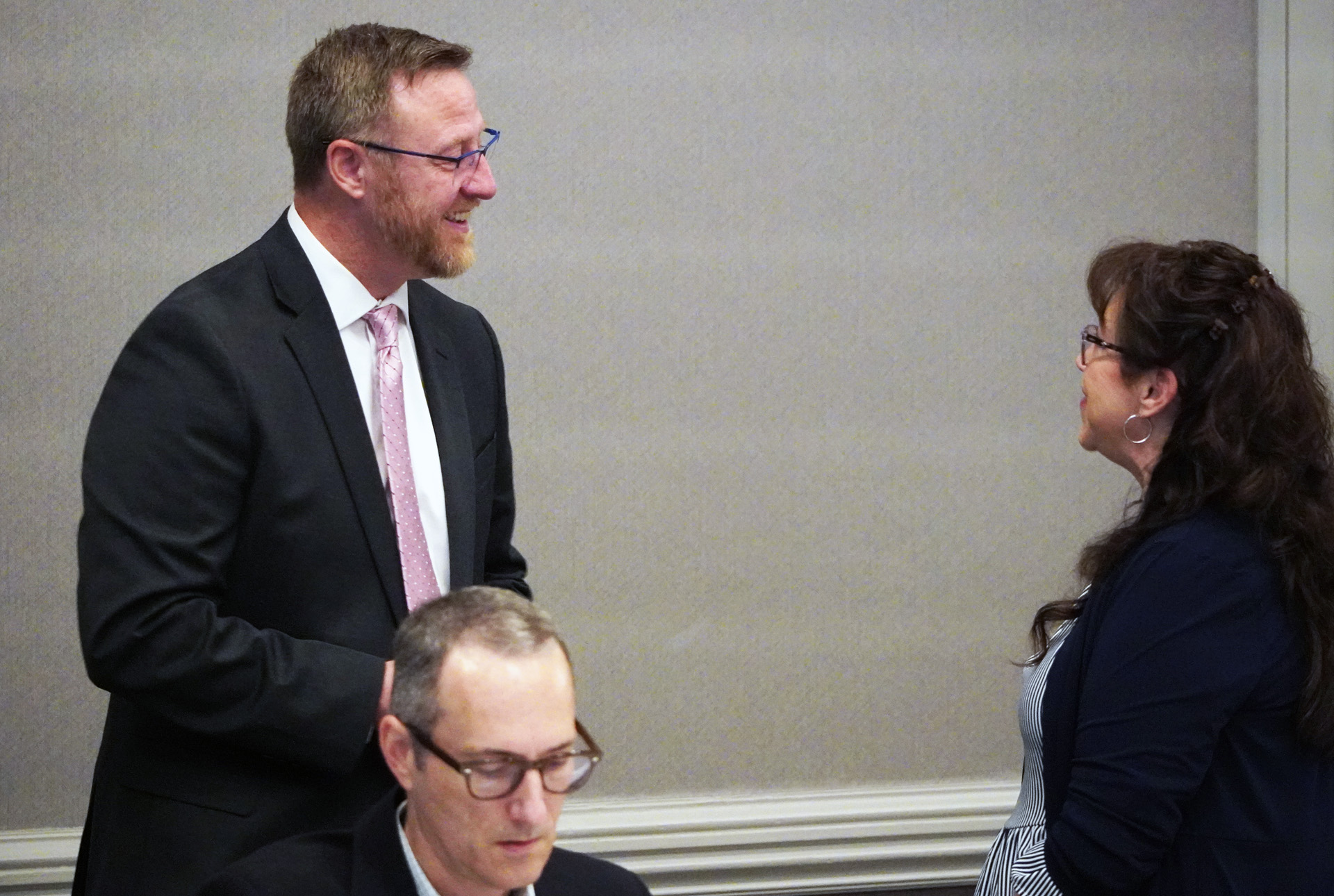
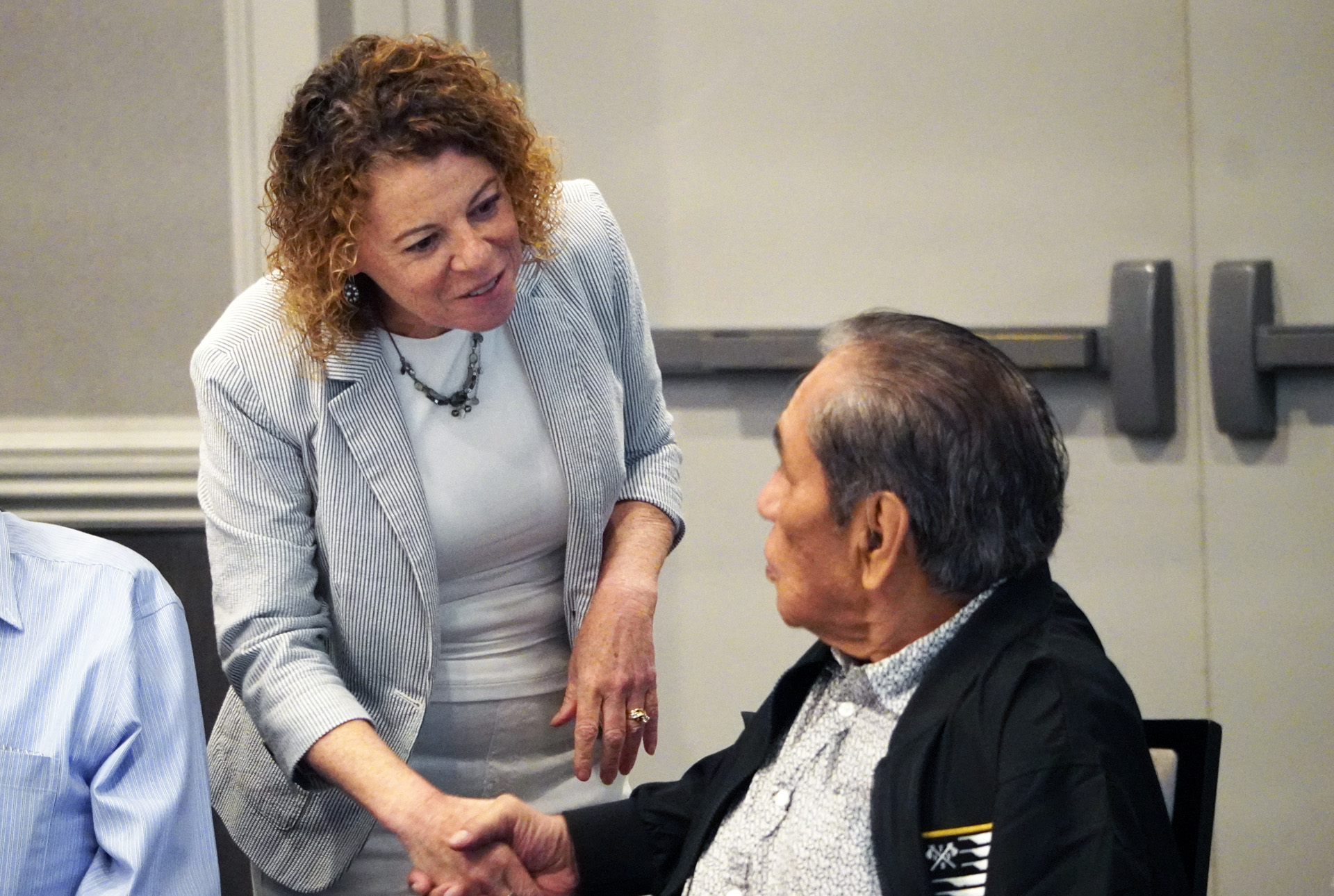
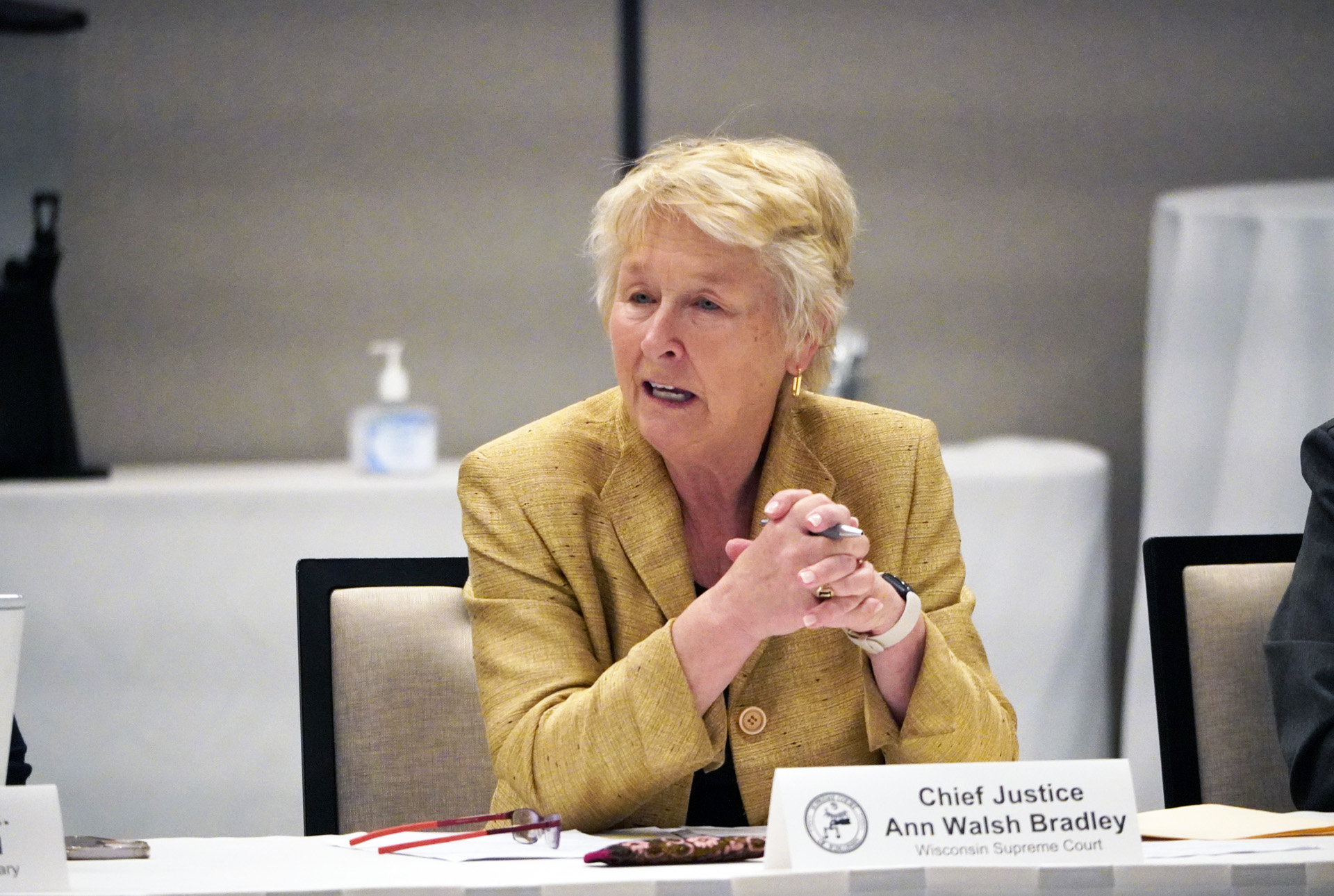
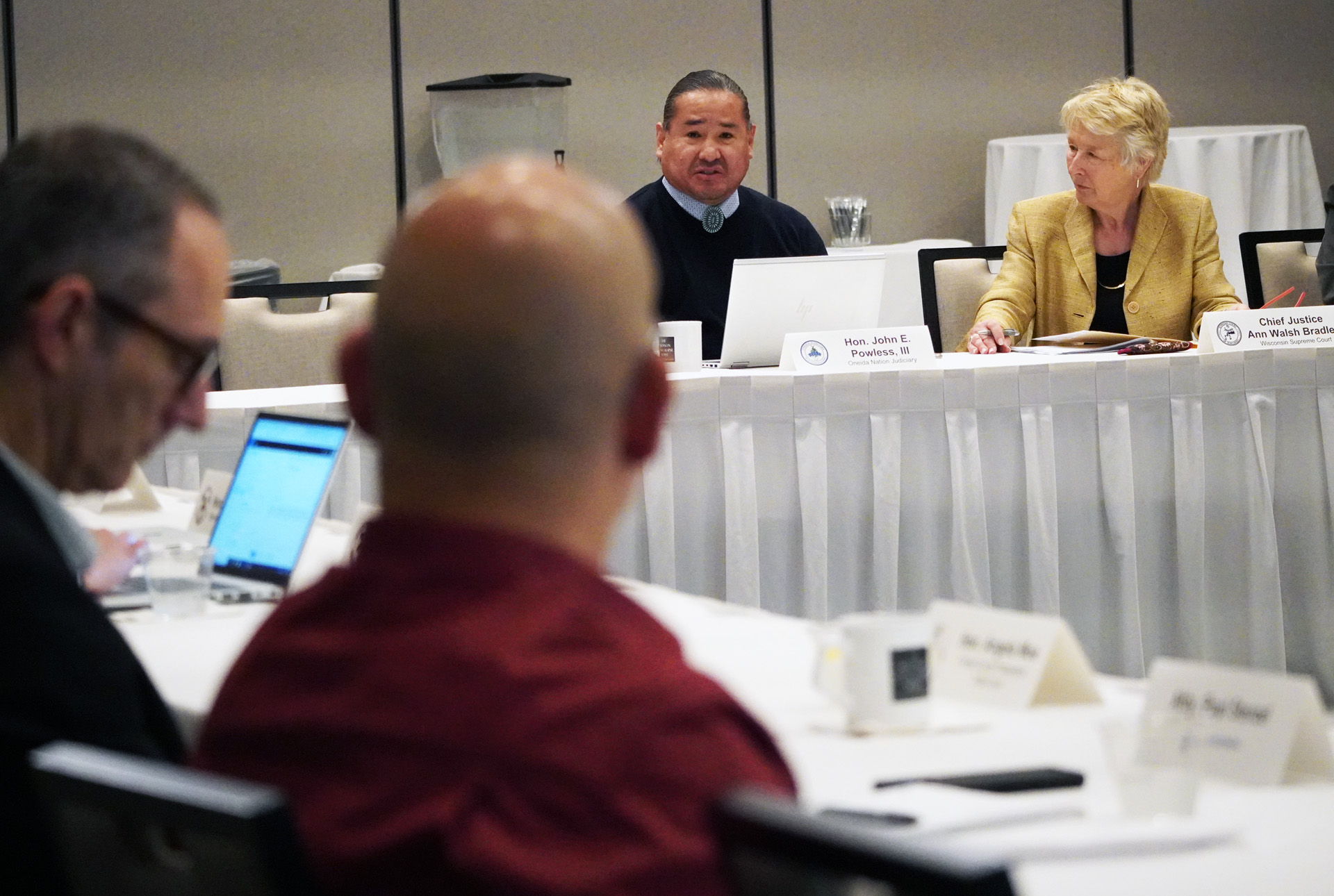
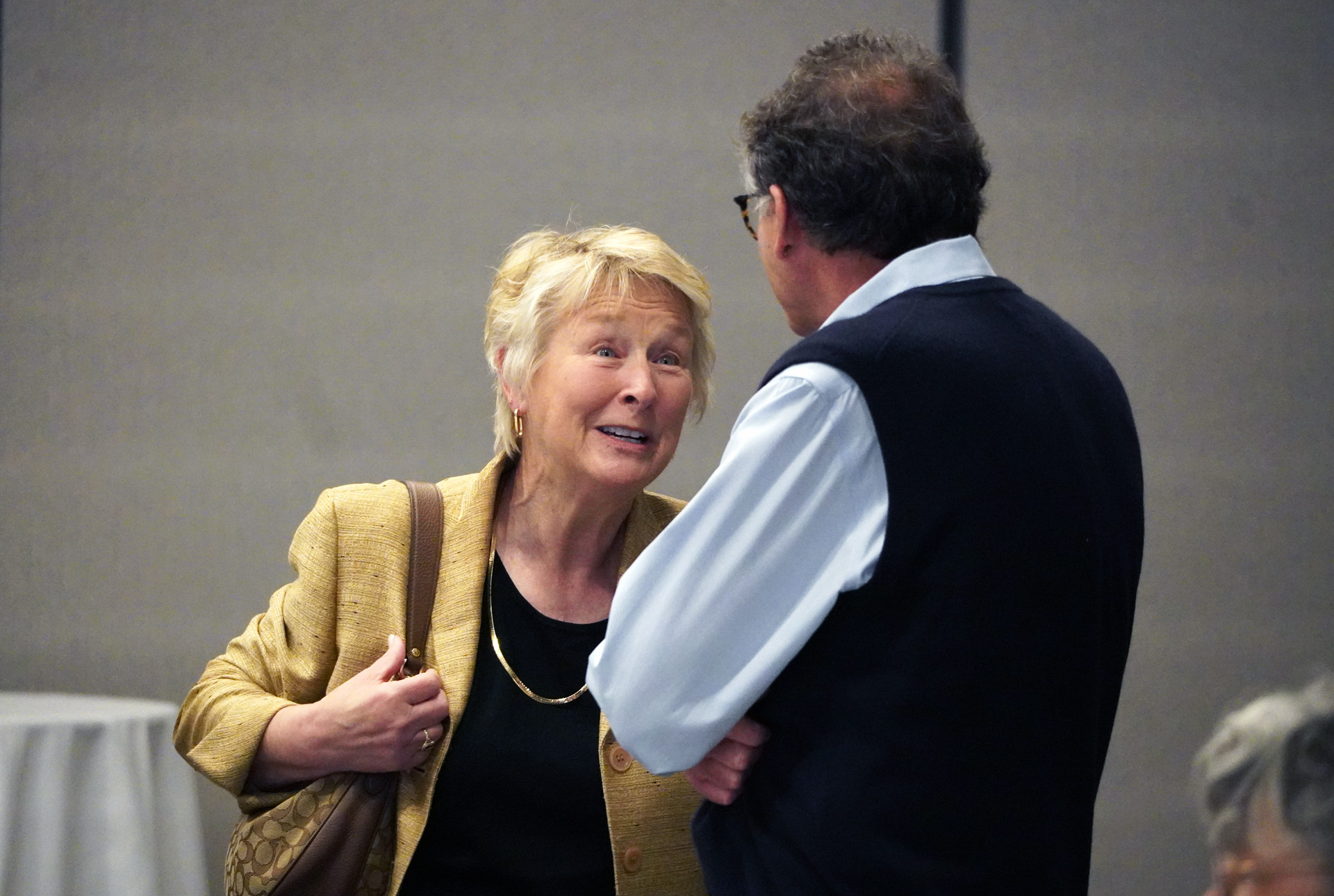
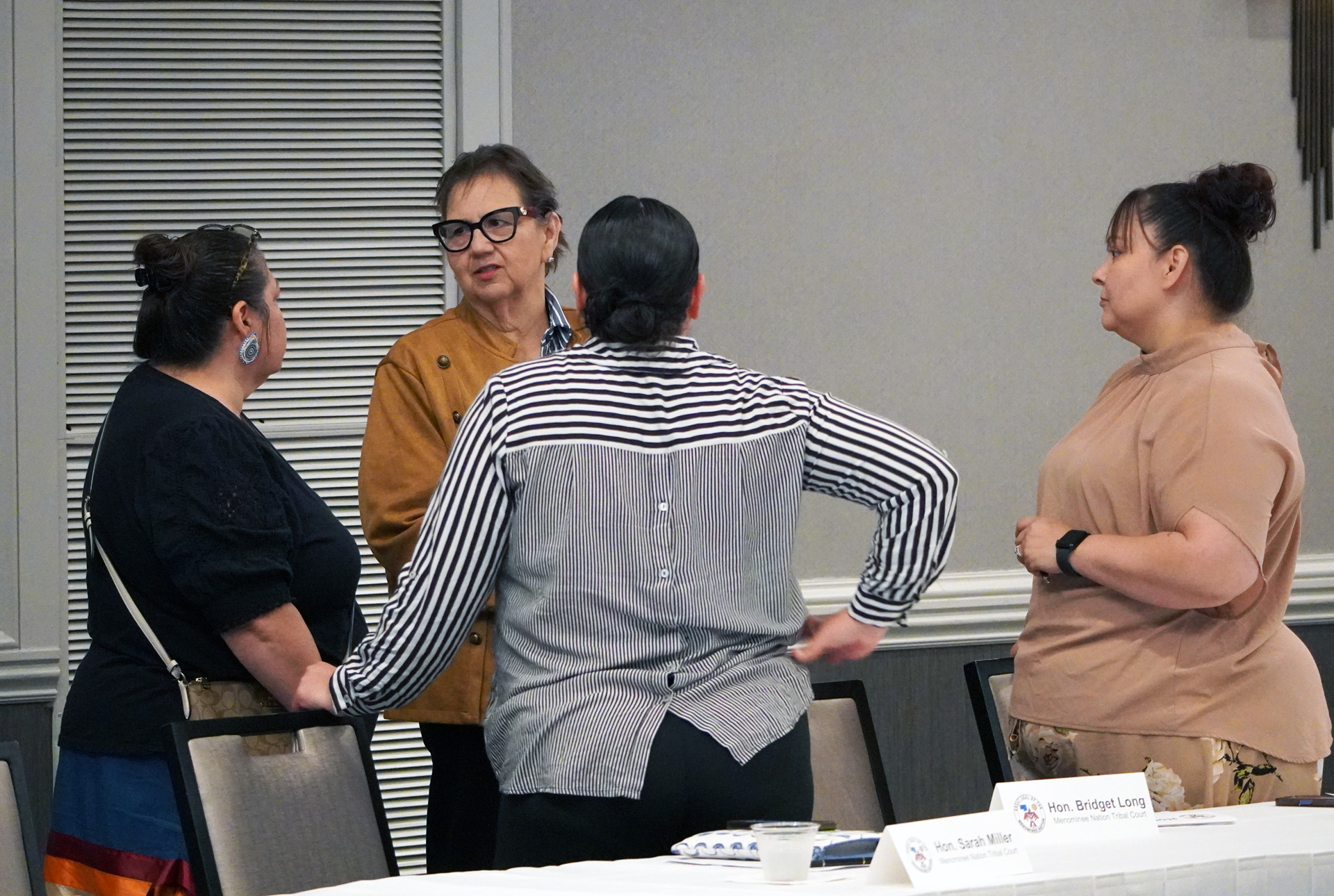
Members of the Wisconsin Tribal Judges Association (WTJA) and the Wisconsin Supreme Court convened in Madison on June 4 for a joint meeting focused on areas of mutual interest, including wellness court initiatives, data sharing, and judicial security. The meeting took place at the Madison Concourse Hotel and included a series of presentations and facilitated discussions.
Chief Justice Ann Walsh Bradley and WTJA President Judge John E. Powless III of the Oneida Nation Judiciary delivered opening remarks and welcomed attendees. Heather Kierzek, Evidence-Based Program Manager with the Office of Court Operations, provided an overview of Healing to Wellness (HTW) Courts, which are operated by several tribal jurisdictions in Wisconsin. The presentation included program updates from several of the tribal courts and highlighted distinctions between HTW courts and other treatment court models.
The discussion then turned to data sharing. Bayfield County Circuit Court Judge John P. Anderson outlined the evolution of the Consolidated Court Automation Programs, or CCAP, which serves as the unified case management system for the circuit courts. By contrast, tribal courts utilize private software vendors for case management systems that are based on their tribal court codes. Ho-Chunk Nation Associate Judge Michelle Greendeer-Rave expressed interest in greater data-sharing opportunities between tribal and state court systems. To this end, the group recommended that the State-Tribal Justice Forum assemble a cross-discipline committee to explore this issue in the coming months.
Judge Patricia Ninham Hoeft of the Oneida Nation Judiciary introduced the concept of a tri-state summit that would bring together tribal and state court representatives from Wisconsin, Minnesota, and Michigan. Participants discussed the potential benefits and logistics of such a gathering.
Judicial safety and privacy were addressed in two separate sessions. Sgt. Tammy Johnson of the Wisconsin State Capitol Police Court Protection Unit reviewed safety considerations for judges, including those in their homes, during travel, and in online environments. Attorney Karley Klein, Chief Legal Counsel in the Director of State Courts Office, provided an overview of the 2023 Wisconsin Act 235, which establishes privacy protections for judicial officers. Atty. Klein also reviewed related forms and resources available to court officials.
The meeting concluded with closing remarks from Judge Powless and Chief Justice Bradley.
Third Branch eNews is an online monthly newsletter of the Director of State Courts Office. If you are interested in contributing an article about your department’s programs or accomplishments, contact your department head. Information about judicial retirements and judicial obituaries may be submitted to: Sara.Foster@wicourts.gov