
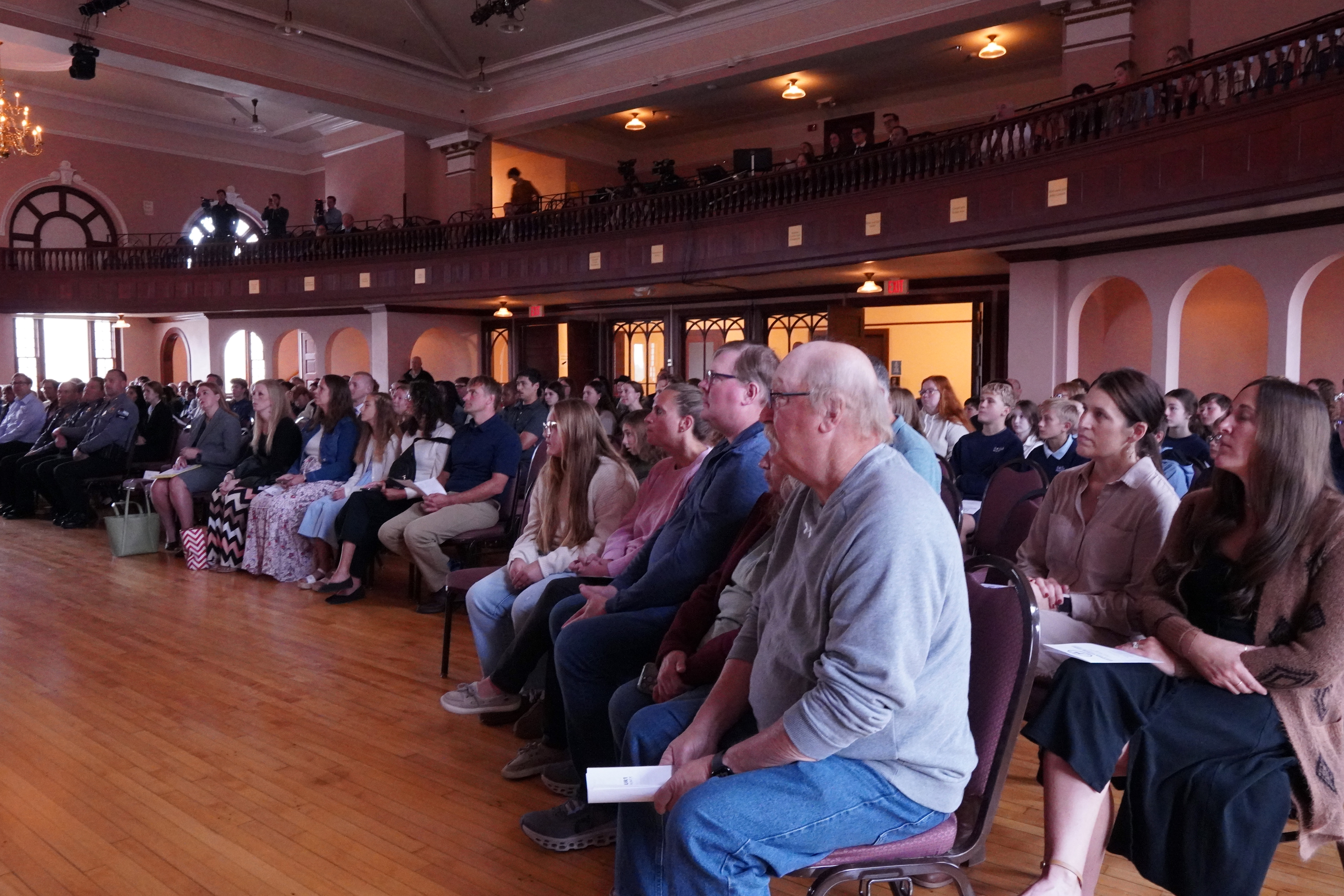
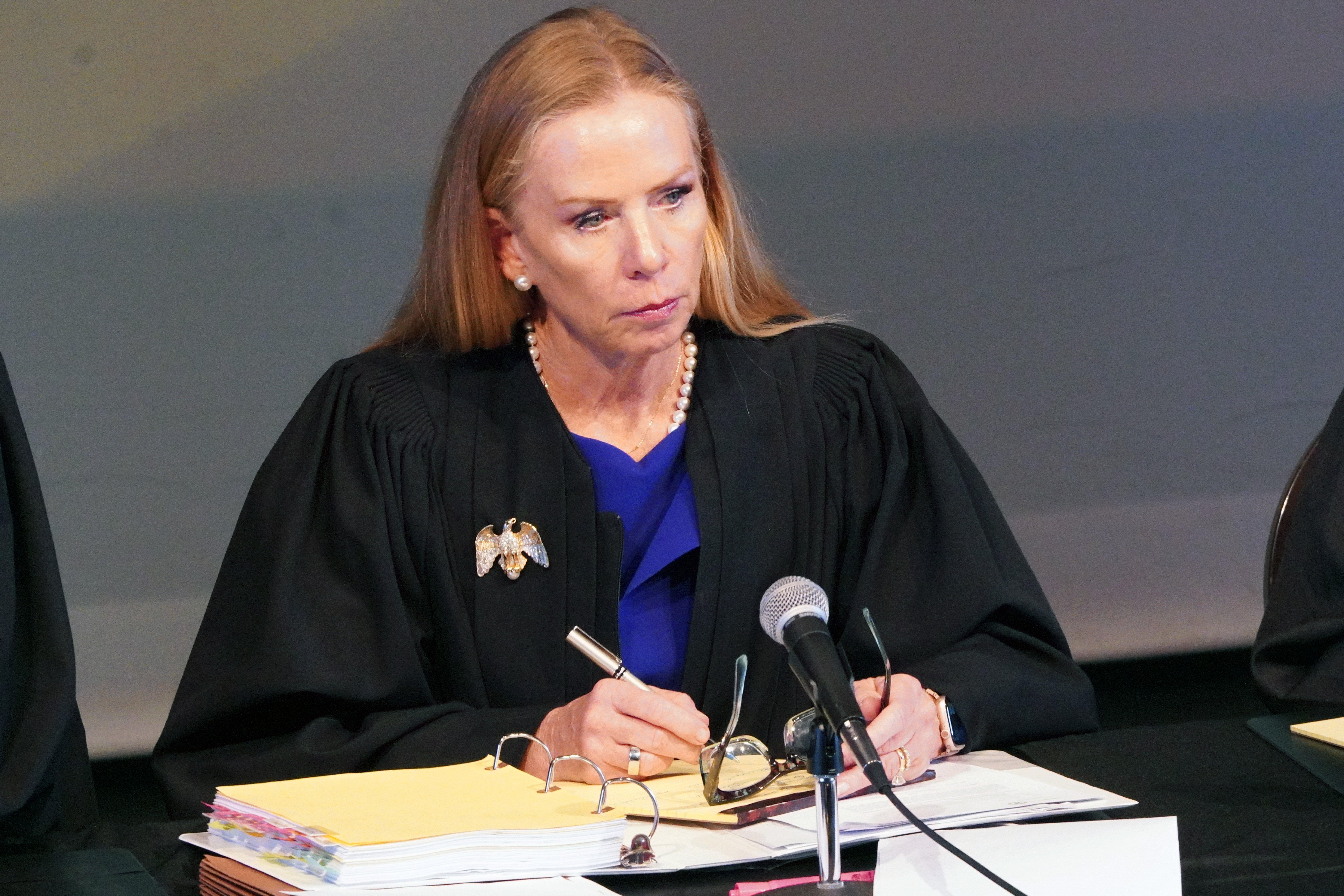
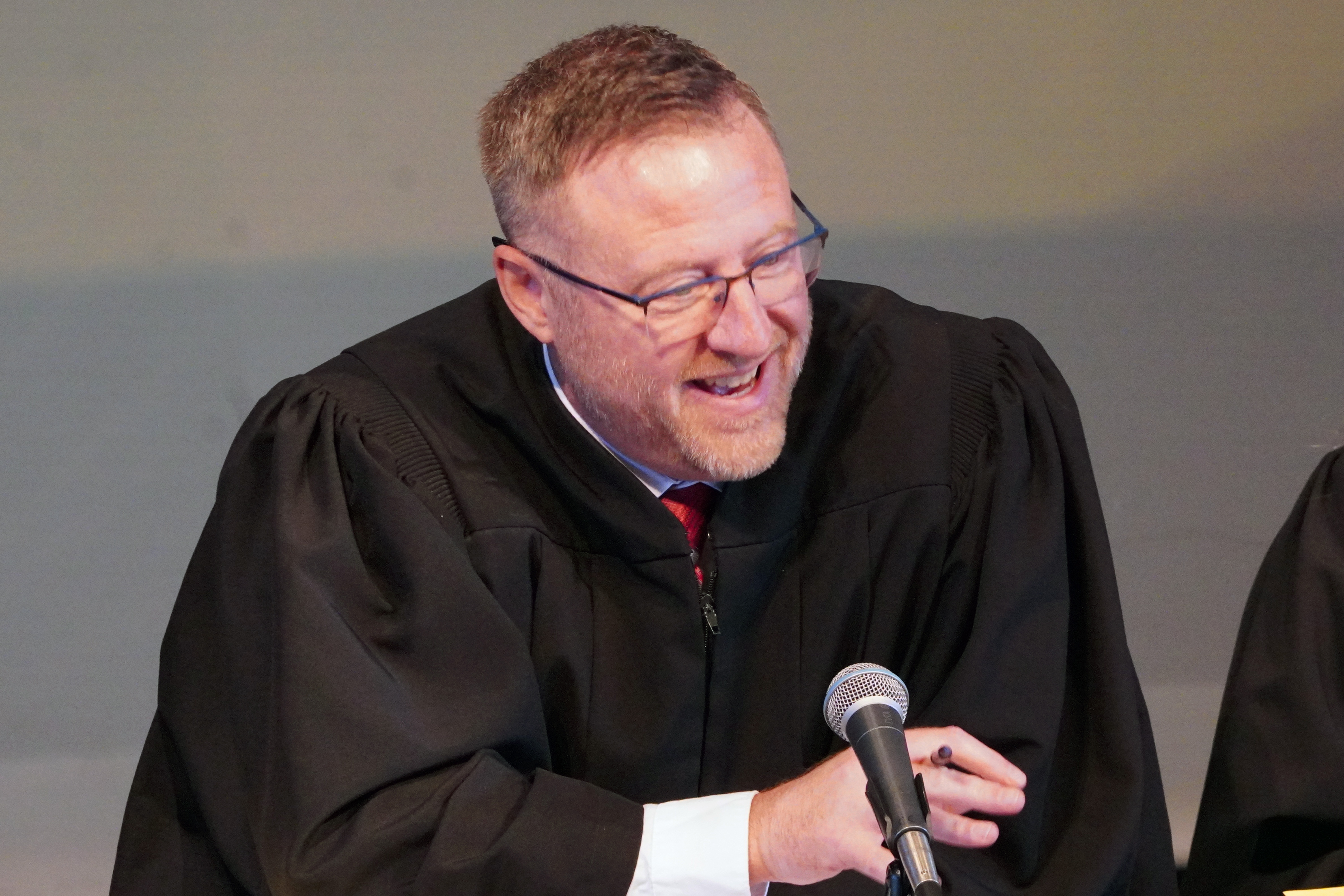
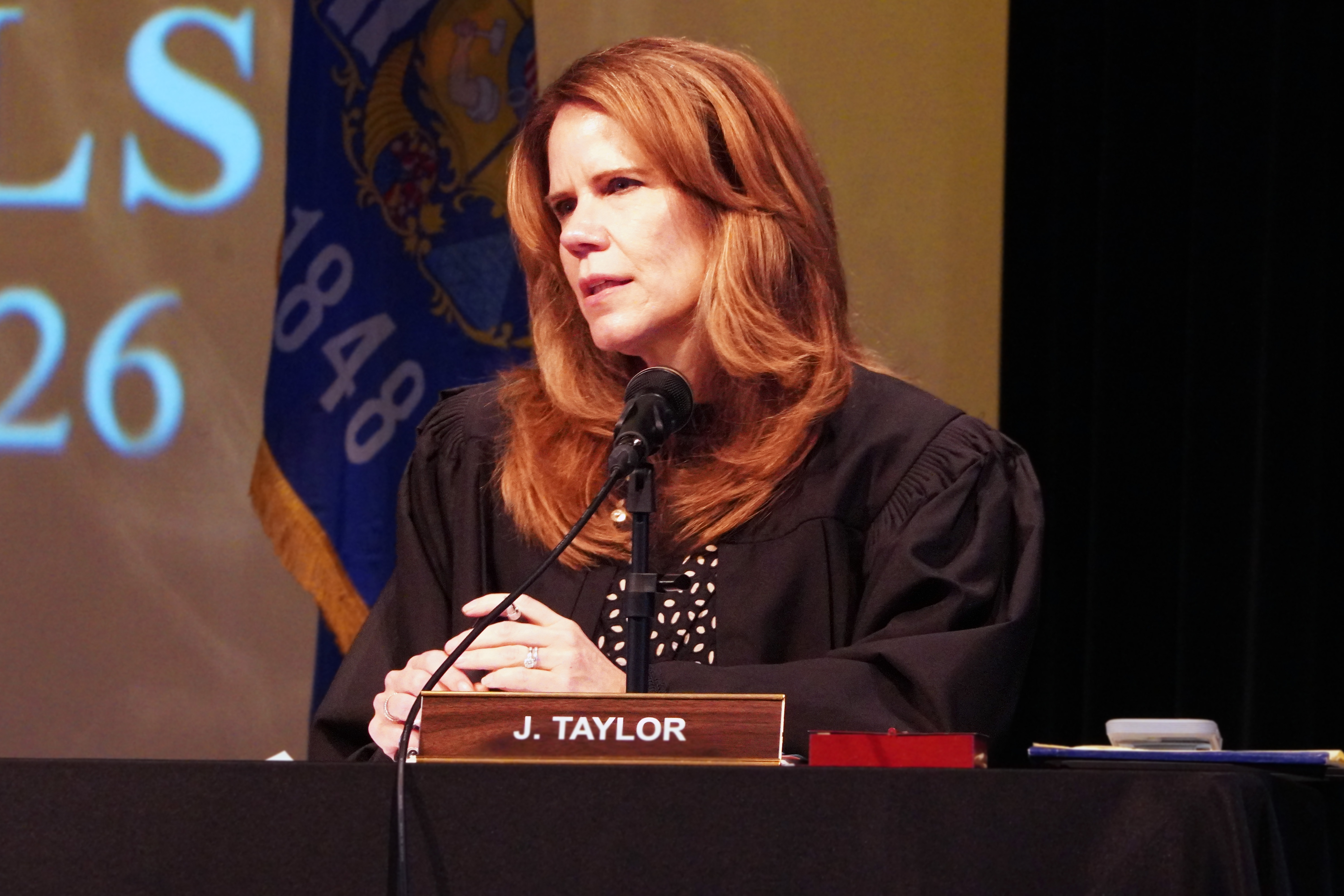
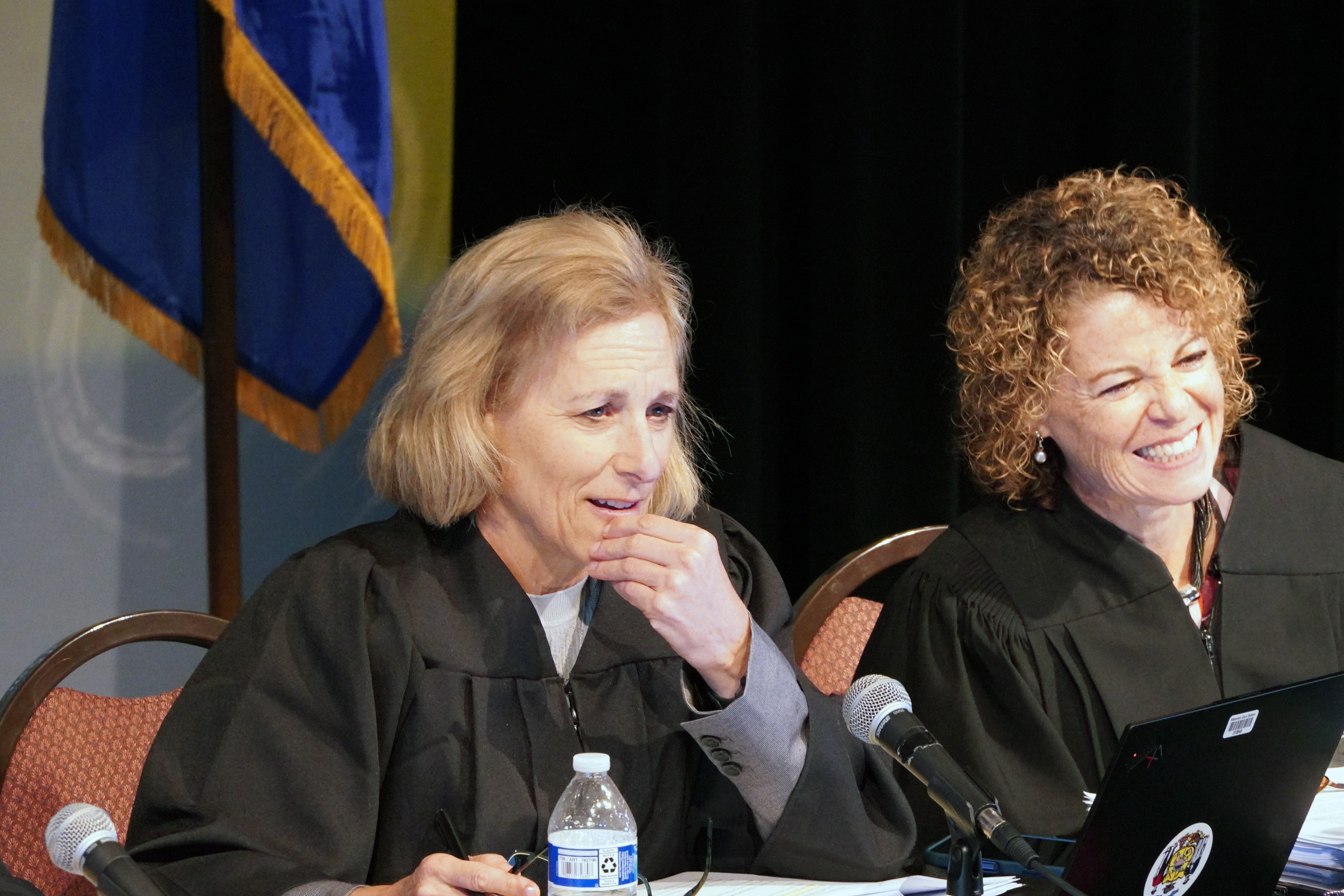
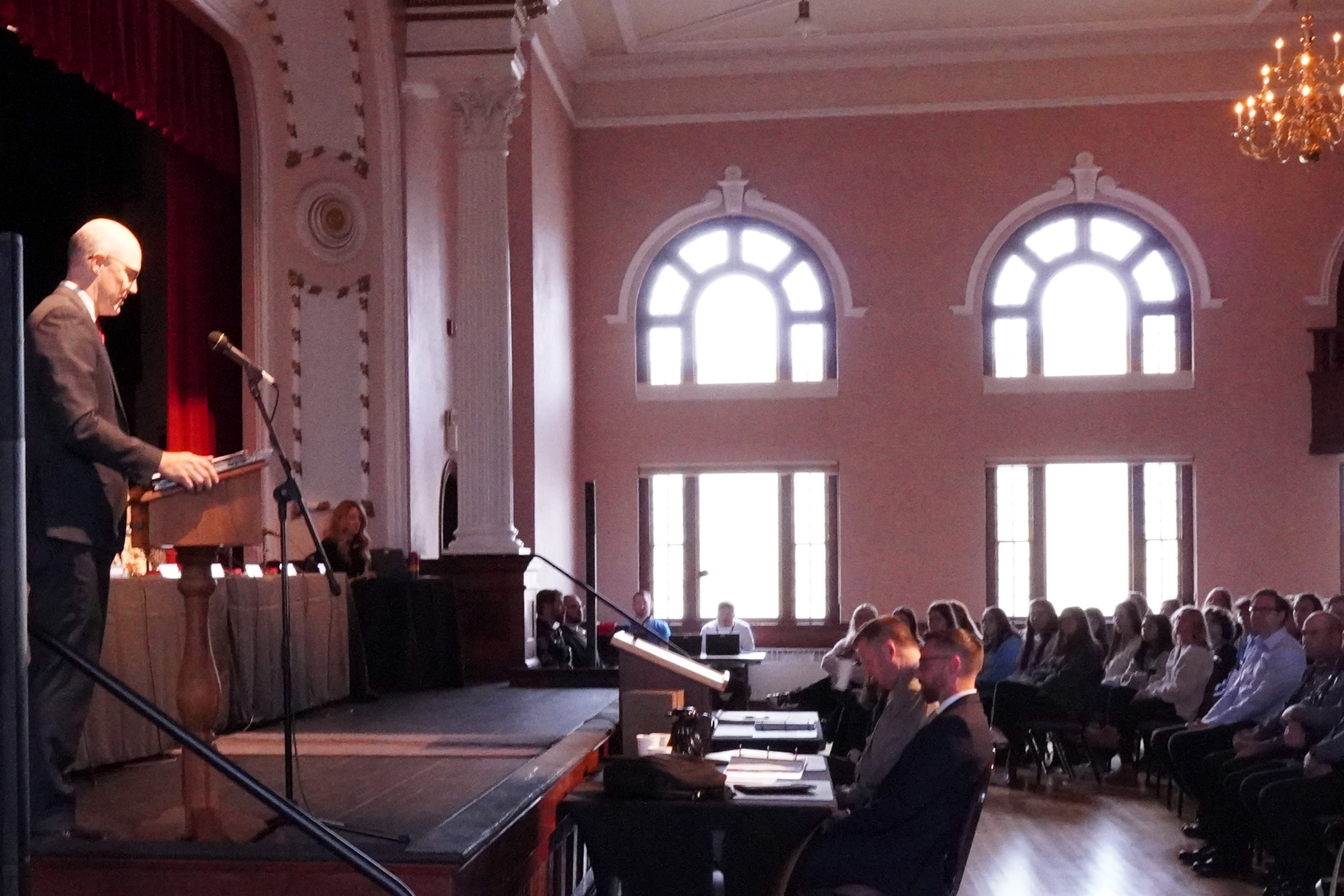
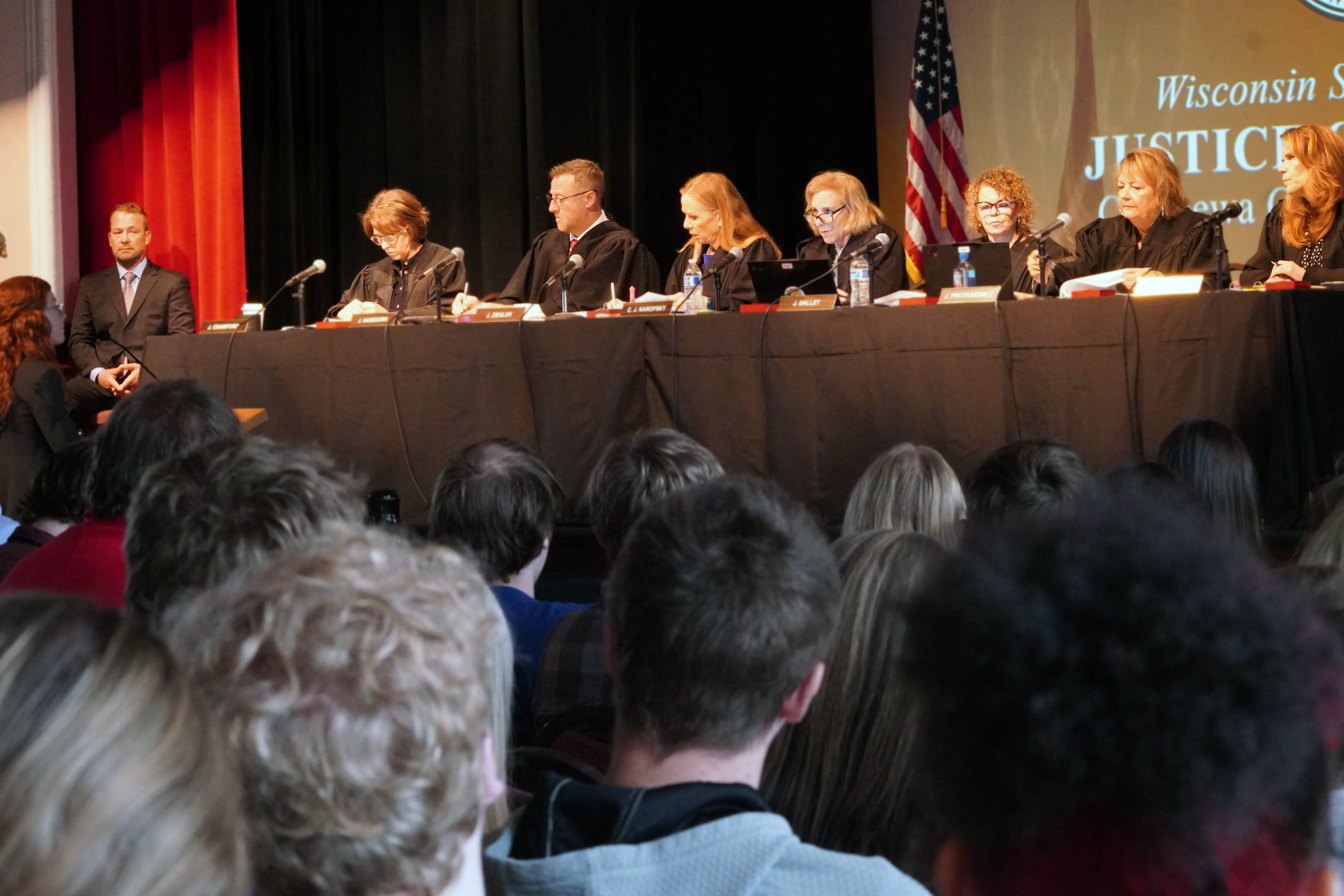
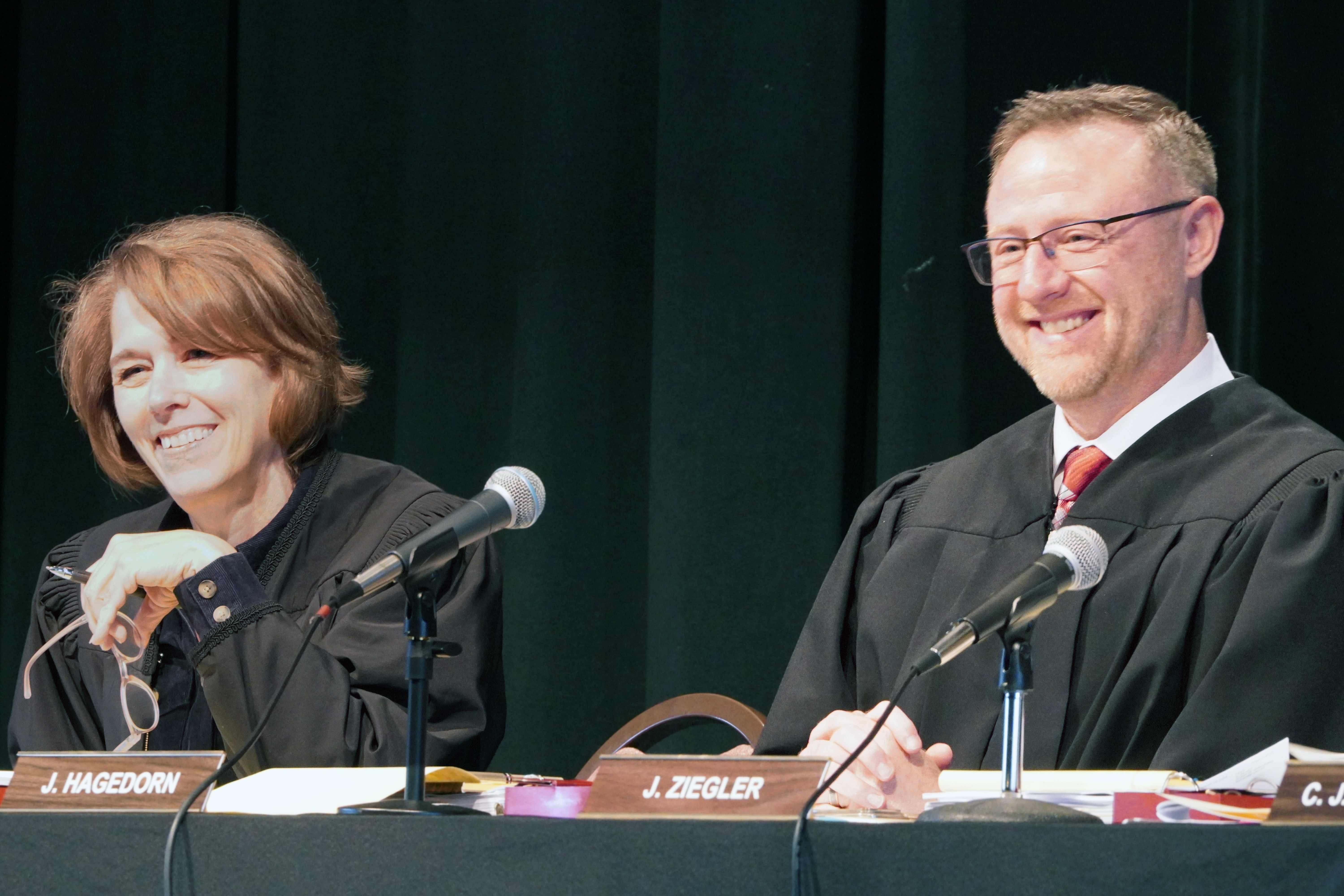

Students, educators, attorneys, judges, local officials, and community members gathered at the Heyde Center for the Arts in Chippewa Falls on October 13 as the Wisconsin Supreme Court held oral arguments in Chippewa County through its Justice on Wheels program.
The visit marked the 34th stop for Justice on Wheels, which began in 1993 as a way for people outside Madison to observe the Supreme Court at work and learn more about the appellate process.
Chief Justice Jill J. Karofsky told the audience that although the Court normally hears arguments at the State Capitol, its work extends throughout Wisconsin.
“The Supreme Court may sit in Madison, but it serves people in every part of Wisconsin,” Chief Justice Karofsky said. “The people who serve on the Court come from communities across this state. So do the cases that reach us and the people whose lives are affected by the law.”
Chippewa Falls has connections to both the current Court and its history. Justice Susan M. Crawford grew up in Chippewa Falls and graduated from Chippewa Falls Senior High School. Chief Justice Karofsky also noted that former Justice Roujet D. Marshall practiced law in Chippewa Falls and served as a local judge before joining the Wisconsin Supreme Court in the late 19th century.
Chippewa County Circuit Court Judge Benjamin Lane welcomed the Court and used his remarks to give students an overview of Wisconsin’s court system. Judge Lane explained how cases generally move from circuit court to the Court of Appeals and how parties may then ask the Supreme Court to review a case.
He also discussed the role of courts within Wisconsin’s system of government.
“People will not always agree with the decisions courts make,” Judge Lane said. “Disagreement is part of our system of government. What matters is that we have peaceful, lawful ways to resolve those disagreements and institutions that give people a way to be heard.”
Students were a significant part of the audience and the morning program. Chief Justice Karofsky said seeing an appellate argument in person offers a different experience from learning about the judicial branch in a classroom.
“You can learn a lot about the judicial branch in a classroom, but there is something different about sitting in the room, listening to lawyers make their arguments, hearing the questions the justices ask, and watching the process unfold in front of you,” Chief Justice Karofsky said.
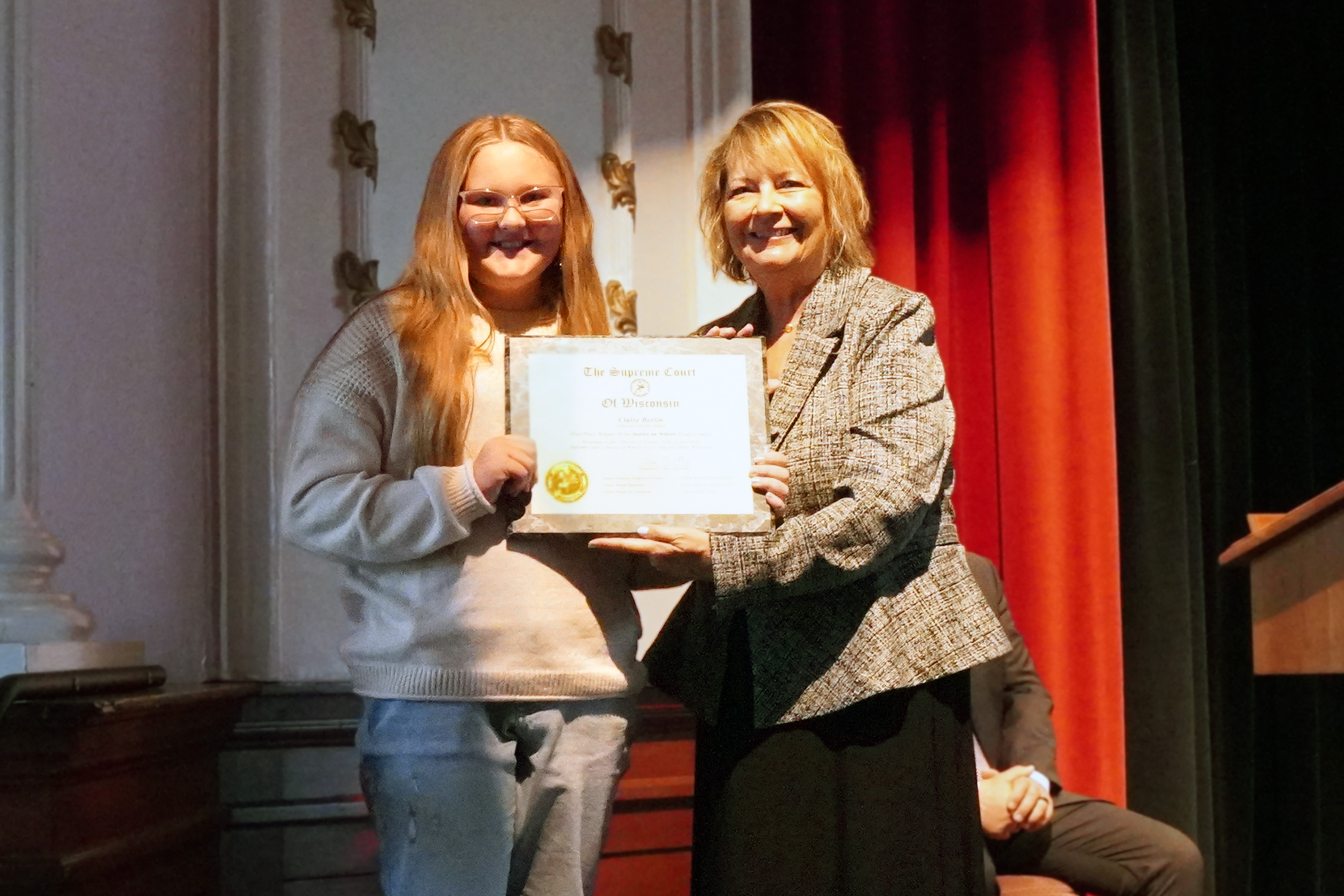
The Court also recognized three students through a fifth-grade civics essay contest held in connection with the visit. Students were asked to respond to the question: “What do you think is the best way a citizen can positively impact the state of Wisconsin?”
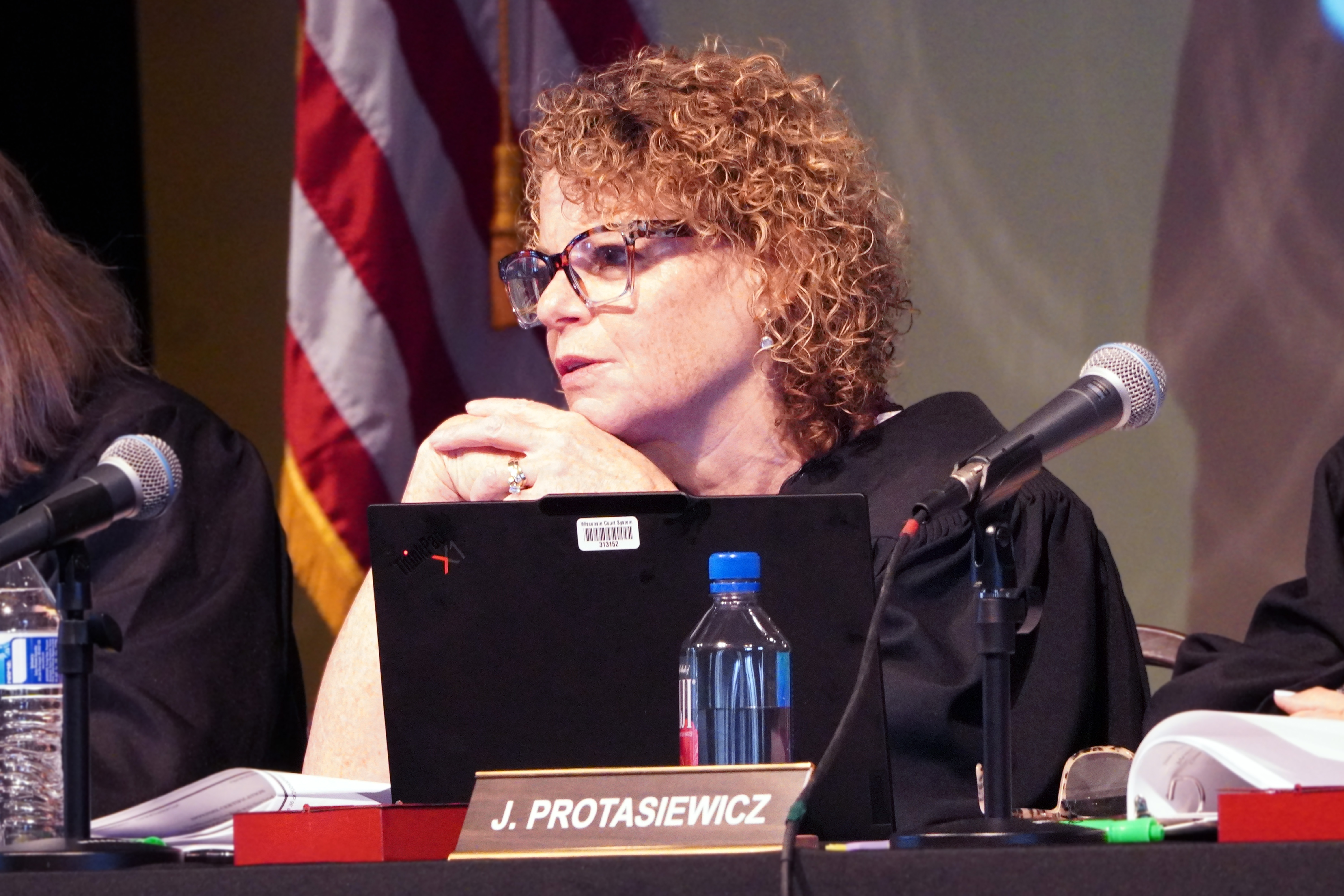
Justice Janet C. Protasiewicz presented the awards and spoke about the broader purpose of the contest.
“Civics is not just learning the names of the three branches of government or memorizing how a bill becomes a law,” Justice Protasiewicz said. “It is also about understanding that you are part of a community, that your choices matter, and that there are all kinds of ways to make that community stronger.”
Claire Berlin of Bloomer Middle School was named the contest winner. Her essay described ways people can make an impact through volunteering, helping neighbors, caring for the environment, and treating others with respect.
Charli Haeny of Stillson Elementary School and Jackie Scray of Southview Elementary School were recognized as contest honorees. Haeny wrote about the qualities of a model citizen, while Scray focused on the importance of staying informed and participating in civic life.
Following the opening ceremony, the Court heard two oral arguments. Before each case, local attorneys provided short introductions intended to give students and other audience members background on the issues they were about to hear.
Karleigh Miller of Cohen Law Office introduced the first argument, while Victoria Czech of Czech Law Office introduced the second.
The visit concluded with a luncheon involving the justices, area judges, attorneys, and local officials. The program included a question-and-answer session and recognition of local partners who assisted with the event.
Justice on Wheels has taken the Supreme Court to communities around Wisconsin for more than three decades. The Chippewa Falls visit gave students and other attendees an opportunity to observe oral arguments firsthand while also learning more about how cases reach the Supreme Court and the role of the judicial branch in Wisconsin government.
Third Branch eNews is an online monthly newsletter of the Director of State Courts Office. If you are interested in contributing an article about your department’s programs or accomplishments, contact your department head. Information about judicial retirements and judicial obituaries may be submitted to: Sara.Foster@wicourts.gov