

People working across Wisconsin’s justice and behavioral health systems often encounter the same individuals at different points, from a mental health crisis or law enforcement contact through court proceedings, corrections, and reentry.
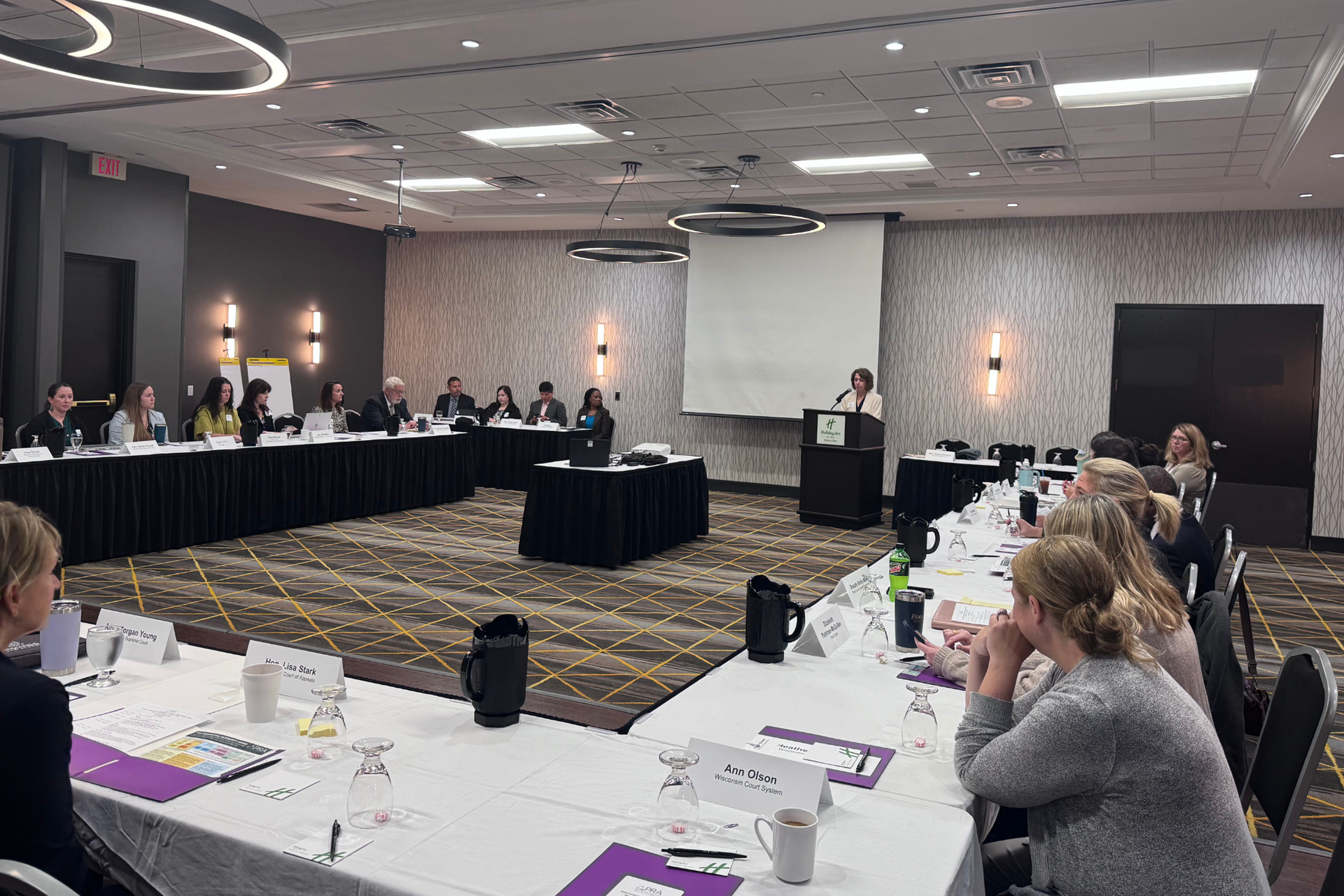
A statewide workshop held September 28-29 brought those perspectives together to identify where better coordination and resources could help interrupt repeated involvement in the criminal justice system.
The Wisconsin Statewide Sequential Intercept Model (SIM) Mapping Summit, hosted by the Wisconsin Supreme Court and facilitated by Policy Research Associates (PRA), included participants from the Department of Health Services, Department of Corrections, Department of Justice, courts, law enforcement, behavioral health, human services, and other organizations.
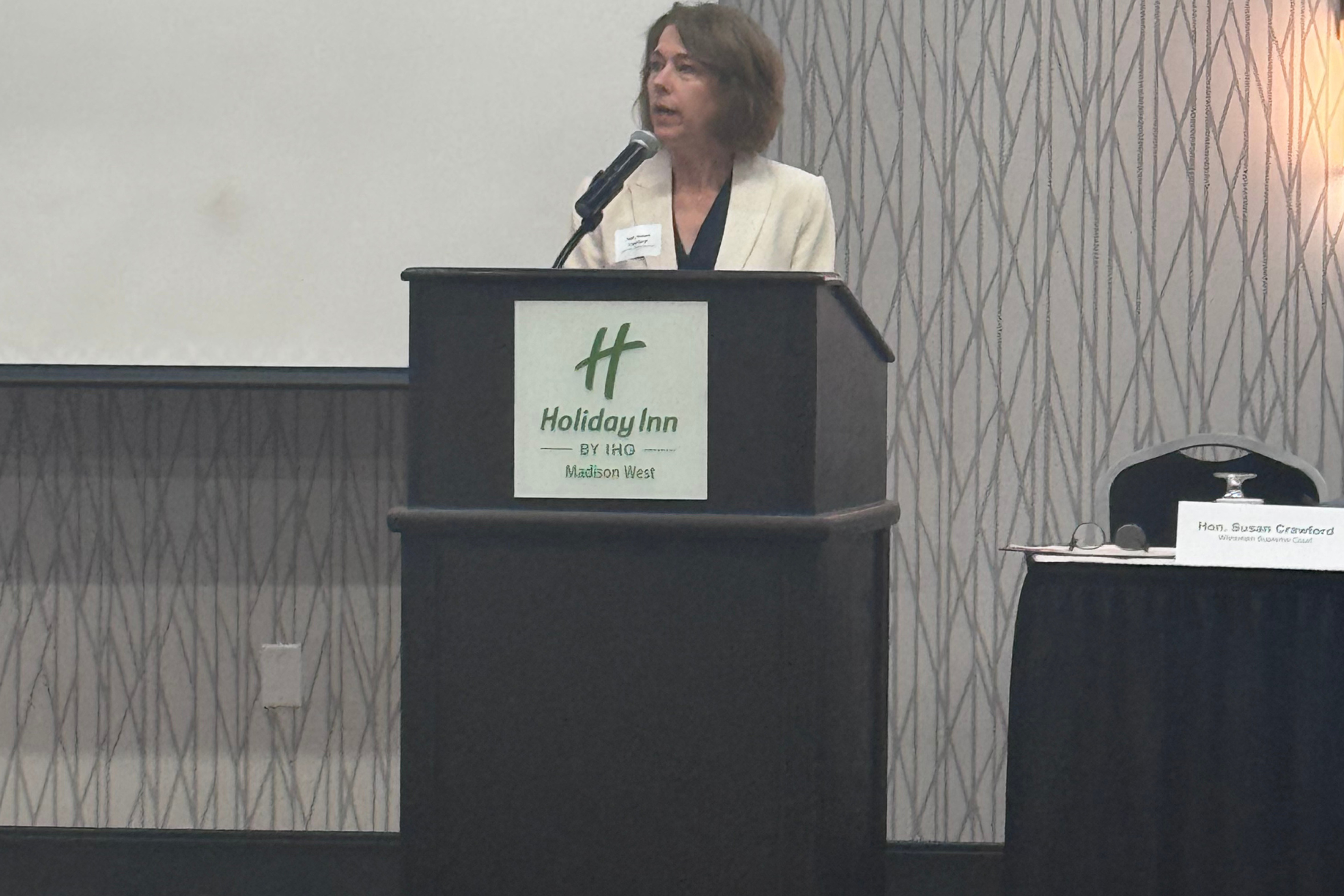
Justice Susan Crawford welcomed participants and drew on her experience as a Dane County Circuit Court judge, including her work chairing the Dane County Community Justice Council’s Behavioral Health Subcommittee. Justice Crawford said people throughout the justice system may recognize when a serious mental health or substance use disorder is driving criminal conduct, even when the tools, resources, and procedures available to address those needs do not align with the criminal justice process.
“Treatment and public safety are not competing goals,” Justice Crawford said. “When a mental health or substance use disorder is a primary driver of criminal behavior, then addressing that disorder with effective, long-term treatment can prevent crime.”
The Sequential Intercept Model is a strategic planning tool that helps communities examine where people with mental health and substance use disorders interact with the criminal justice system, identify existing resources and gaps, and set priorities for improving coordination and services.
Over the last year and a half, SIM workshops have been organized in 10 Wisconsin counties through an initiative that began with support from the State Justice Institute and continued with additional funding from the Wisconsin Department of Health Services. Justice Crawford thanked DHS for supporting both the county-level work and the statewide summit.
Participants spent much of the workshop comparing what they see from different parts of the system and identifying where resources, policies, or communication could be improved. After identifying gaps and priorities on the first day, groups returned on the second day to develop possible next steps.
A judicial panel also offered perspectives from SIM work already underway in Wisconsin. Milwaukee County Circuit Court Chief Judge Carl Ashley, Jefferson County Circuit Court Judge Bennett Brantmeier, and La Crosse County Circuit Court Chief Judge Scott Horne discussed their experiences with SIM workshops and answered questions from participants.
The workshop concluded with participants focused on where agencies and systems could better align their work and resources.
“We all want to see fewer people with serious mental health disorders entering or repeatedly cycling through the criminal justice system,” Justice Crawford said. “We want to see the limited resources in our mental health and criminal justice systems put to their best and most appropriate use. And we all want safer communities and a healthier population.”
Wisconsin Director of State Courts Audrey K. Skwierawski and PRA Vice President Travis Parker closed the summit following the second day of action planning and participant report-outs.
Third Branch eNews is an online monthly newsletter of the Director of State Courts Office. If you are interested in contributing an article about your department’s programs or accomplishments, contact your department head. Information about judicial retirements and judicial obituaries may be submitted to: Sara.Foster@wicourts.gov