
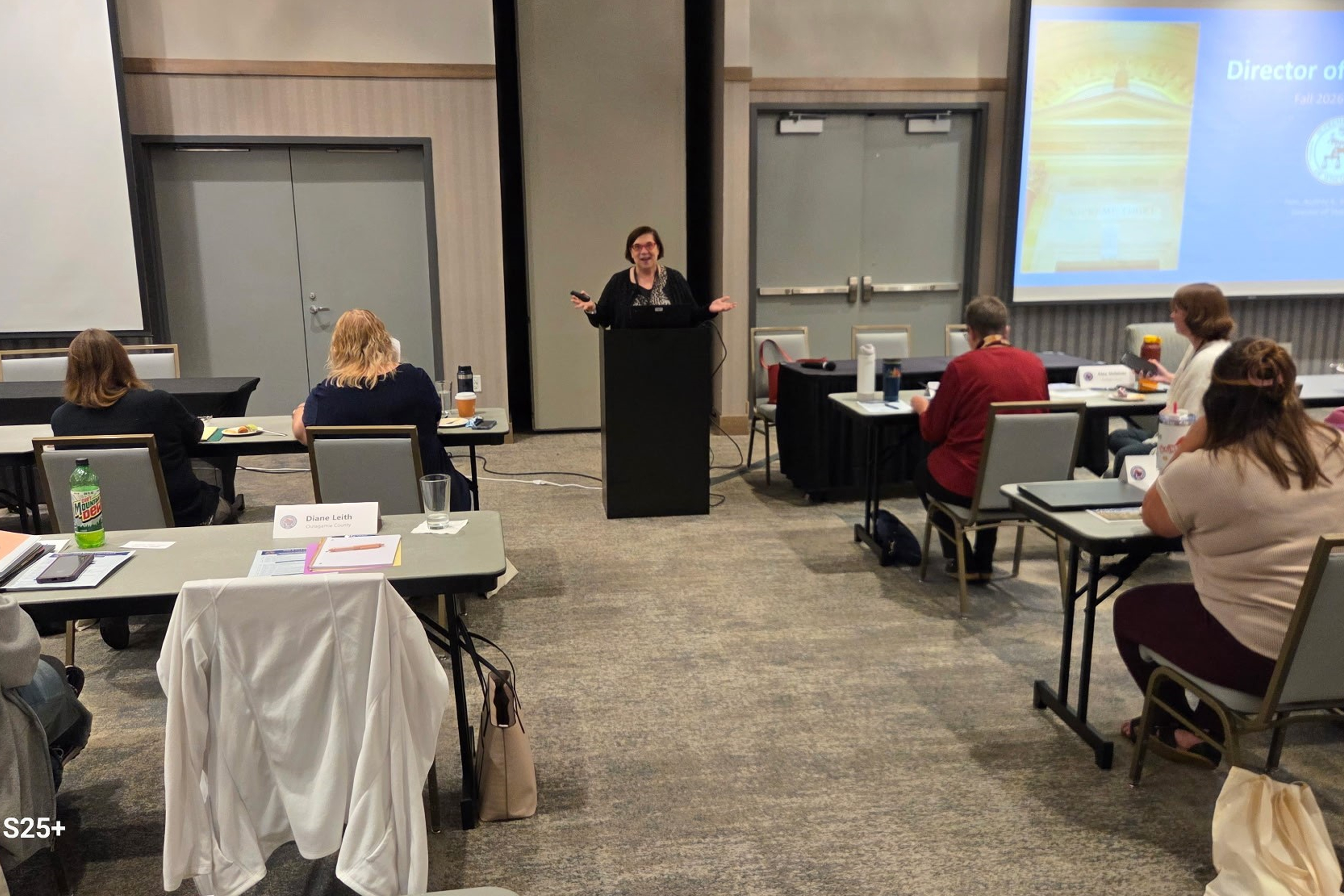
From comparing county practices to examining juvenile proceedings through a mock hearing, Wisconsin juvenile court clerks focused on the details of their daily work during the Wisconsin Juvenile Court Clerks Association (WJCCA) conference September 16-18 in Oak Creek.
The conference was co-sponsored by WJCCA and the Children’s Court Improvement Program (CCIP). Director of State Courts Audrey Skwierawski provided an update on the Wisconsin Court System and reflected on her own experience in juvenile court, including working with her juvenile clerk during the COVID-19 pandemic.
A panel of juvenile judges emphasized the support clerks provide, particularly when a judge takes on juvenile cases without prior experience in that area. Judges discussed how clerks help ensure required findings are addressed and shared perspectives from both dedicated juvenile courts and courts handling a broader range of cases.
One survey respondent said the panel offered ideas to discuss with judges back home, along with changes the clerk could make to their own workflow to help proceedings run more smoothly.
A mock hearing and role-playing exercise connected juvenile delinquency and competency proceedings with the clerk’s responsibilities before and after each hearing. Waukesha County Circuit Court Judge Jennifer Dorow, Commissioner David Herring, State Public Defender Local Attorney Manager Nicole Ostrowski, guardian ad litem Molly Schmidt, and Assistant District Attorney Peter Tempelis participated in the exercise. Waukesha County Juvenile Clerk Liz Adams explained the clerk’s work at each stage.
“I learned quite a bit from this session. We don't have very many of these in my small county and so this was very helpful to me,” one respondent wrote in the conference survey.
Clerks also reviewed the placement options available in different types of juvenile cases. Milwaukee Children’s Court Staff Attorney Robert Mochel and Assistant Chief Deputy Administrator Ka Yang discussed those options and clerks’ responsibilities in helping ensure the appropriate findings and orders are made.
Training also covered records and technology, with presentations from the Department of Health Services’ State Vital Records Office and Consolidated Court Automation Programs (CCAP). Marquette University’s Dr. Michael Zimmer addressed developments in artificial intelligence.
Clerks met within their judicial districts to compare county practices and discuss questions with colleagues who handle similar work. County-sharing discussions and a closing “buzz session” with CCIP staff offered additional opportunities to learn how other offices approach their responsibilities.
The conference rotates among host districts across the state each year. The 2027 conference is scheduled for October 27-29 at the Grand Geneva.
Third Branch eNews is an online monthly newsletter of the Director of State Courts Office. If you are interested in contributing an article about your department’s programs or accomplishments, contact your department head. Information about judicial retirements and judicial obituaries may be submitted to: Sara.Foster@wicourts.gov